According to McKinsey research, 78% of organizations have already applied AI in at least one part of their operations in 2024, up from 55% the year before. This growing adoption highlights how AI is essential to boosting business performance, from automating routine tasks to enabling smarter, data-driven decision-making. What used to be seen as a “nice to have” is now a strategic necessity that can’t be ignored.
With the rise of generative AI or agentic AI, AI integration has become essential for businesses of all sizes looking to boost revenue, improve efficiency, and stay competitive.
In this blog, we will cover what AI integration really means, its benefits and challenges, along with how to integrate ai into an app. We also share practical examples of how businesses are using AI to enhance performance across teams and workflows.
Let’s get started!
AI Integration is the practice of embedding artificial intelligence technologies into core business workflows to enhance operational efficiency. It supports advanced automation, uncovers deeper customer insights, and helps create more personalized experiences throughout the user journey.
As AI technology advances, it reshapes the way organizations handle data, make decisions, and engage with customers. Businesses can now leverage AI systems to process large volumes of data, identify patterns, and anticipate future trends, reducing their dependence on manual operations. This shift allows companies to respond faster and more accurately to changing market demands.
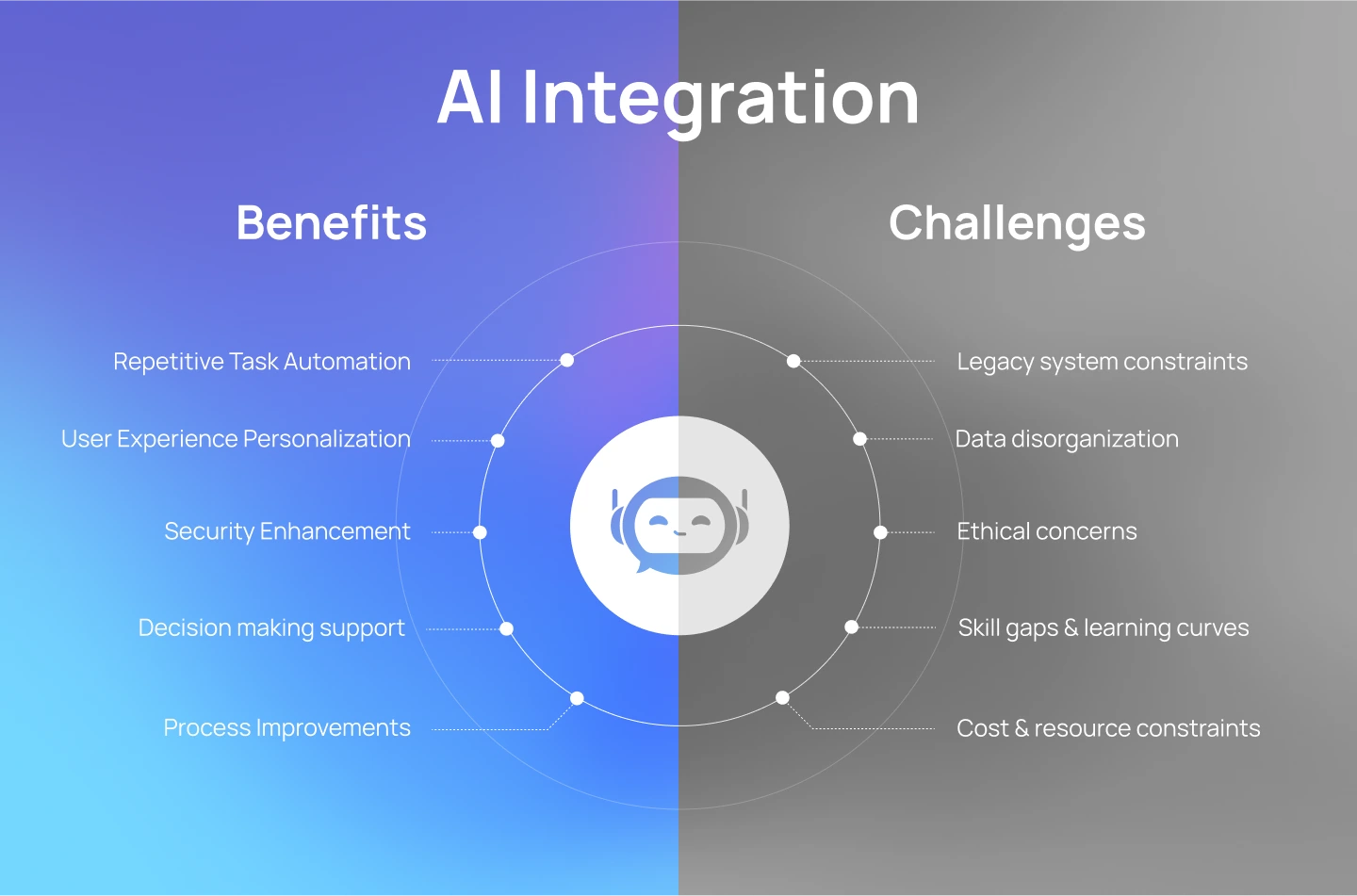
As demand increases, many companies are looking for AI integration services to efficiently scale these capabilities. This brings multiple benefits, including:
While AI integration offers significant benefits, businesses often encounter significant challenges. Identifying these obstacles early is essential for developing effective strategies and ensuring long-term success:
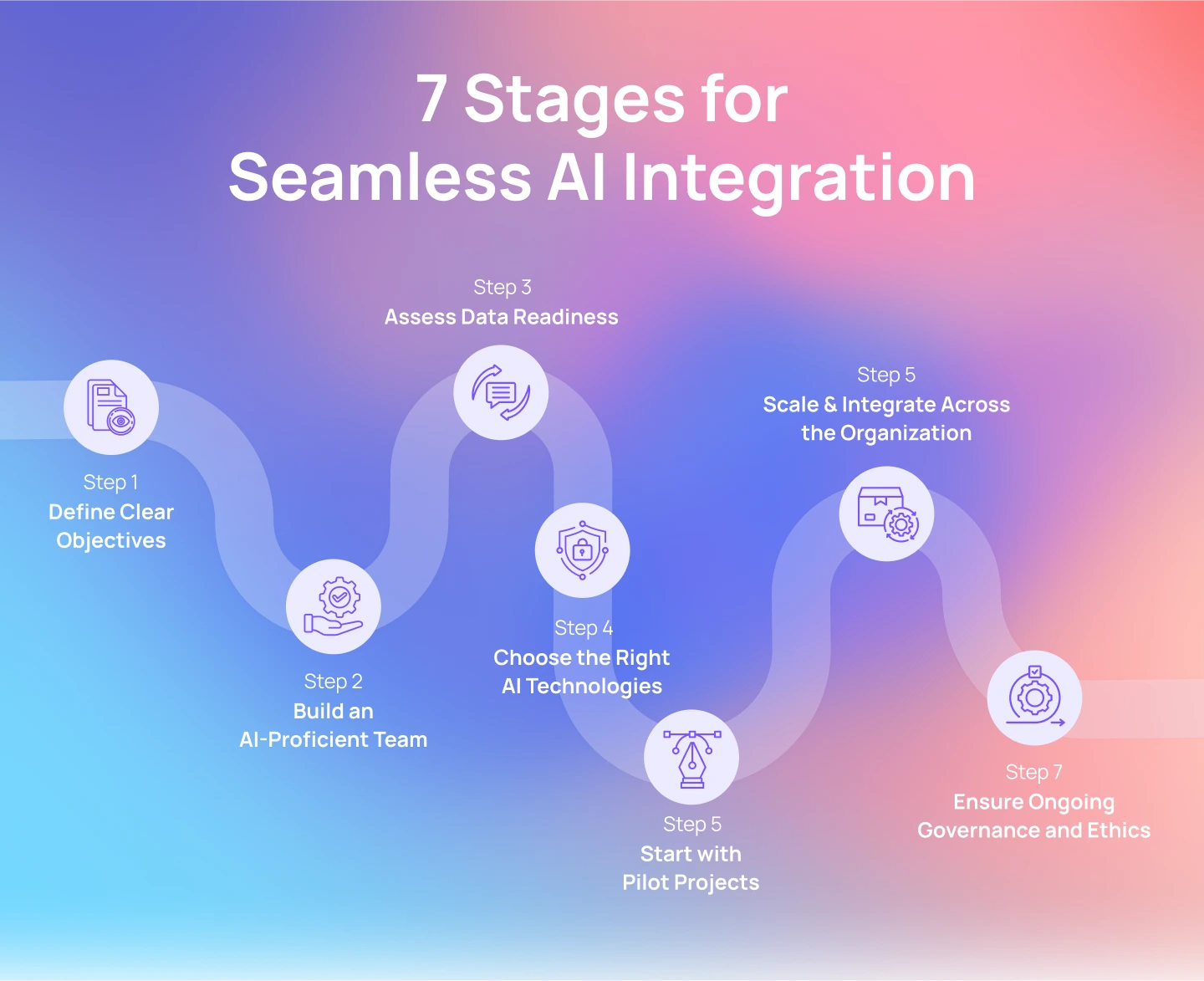
Before jumping into AI integration, it’s crucial to understand the purpose behind it. A clear objective ensures that AI initiatives solve real business problems, rather than chasing trends. This helps businesses avoid scope creep and lay the foundation for success.
How to conduct:
Clarifying the core problem early enables smarter decisions about which data to collect, which AI methods to use, and where to integrate AI in workflows. It also makes it easier to demonstrate value and secure long-term buy-in across the organization.
Once objectives are defined, success depends on having the right people to execute. A cross-functional team, blending technical skills with business understanding, ensures AI solutions are not only feasible but relevant and impactful.
How to conduct:
AI runs on data — but if your data is messy, siloed, or inaccessible, even the most powerful models will fall short. Assessing data readiness early helps avoid delays, ensures model reliability, and lays the groundwork for scalable AI systems.
How to conduct:
Selecting the right AI technologies as AI agent frameworks is critical to turning strategy into scalable reality. A poorly matched tech stack can lead to compatibility issues, security risks, or costly rework. The right AI agents, on the other hand, ensure smooth integration, long-term flexibility, and faster time to value.
How to conduct:
Jumping into full-scale AI implementation without A/B testing can lead to wasted resources and poor adoption. Pilot projects allow you to validate assumptions, uncover technical or operational gaps, and gather real-world feedback — all while keeping risks low and learning high.
How to conduct:
As you recognize success with your pilot project, it’s time to scale and integrate the AI across your business operations. This step involves embedding AI into everyday workflows, promoting organization-wide adoption, and preventing isolated “islands” of innovation that don’t drive value.
How to conduct:
AI Integration is not a one-time project—it’s an evolving system that requires continuous oversight to remain fair, compliant, and trustworthy. Strong governance and ethical practices protect your organization from reputational damage, legal risks, and biased outcomes as AI models and data change over time.
How to conduct:
Ongoing governance ensures your AI remains responsible, reliable, and aligned with both ethical standards and business goals.
You may want to read more: Agentic AI vs Generative AI – Key Differences & Use Cases
As modern businesses strive to stay competitive, AI business integration has become a crucial strategy for enhancing efficiency and innovation. The following examples illustrate how companies successfully implement AI solutions to solve real-world problems and accelerate growth.
Many organizations struggle with managing large volumes of customer inquiries quickly and accurately. Thanks to AI chatbot integrations, businesses can offer scalable self-service options that let customers get instant support without waiting for a human agent. Meanwhile, virtual assistants use AI to analyze requests, access multiple data sources, and handle common issues, ensuring a smoother, more efficient customer experience.
This approach is especially useful for industries aiming to integrate AI/ML with banking. One example is a major telecommunications provider that employs AI-powered assistants to deliver round-the-clock customer support. If a customer sees an unexpected charge late at night, the assistant can respond instantly, verify the issue, and guide them through freezing the card and filing a dispute.
AI-powered product recommendation engines play a key role in helping businesses create personalized shopping experiences. These systems examine user behavior, purchase history, and personal preferences to recommend products that align with each customer’s interests. This personalization improves customer satisfaction, increases sales, and lowers the chance that shoppers abandon their carts.
A well-known case of this being applied effectively is Amazon, a leading name in the AI eCommerce industry. When a customer adds running shoes to their cart, the system can suggest related items like athletic apparel or fitness trackers. These suggestions update in real-time, ensuring that recommendations remain relevant and personalized throughout the shopping journey.
AI systems also help improve demand forecasting by analyzing extensive data to detect subtle patterns and predict future demand with high precision. This helps businesses improve inventory management, lower expenses, and enhance operational performance.
Walmart provides a strong example of this in action. The company uses AI-powered predictive tools to monitor sales and stock levels across its stores. When the system detects sudden changes in demand for certain products, it notifies managers who then adjust inventory distribution and ordering plans. This proactive approach helps Walmart keep shelves stocked during busy periods and unexpected market fluctuations.
Predictive maintenance is a valuable use of AI that enables businesses to minimize equipment downtime and cut maintenance expenses. This technology uses historical and real-time data collected from equipment sensors to anticipate when machines are likely to fail or require servicing. Companies can schedule maintenance activities more effectively, avoiding unexpected breakdowns and extending the lifespan of their assets.
In real-world practice, many manufacturing firms implement AI-powered predictive maintenance systems to monitor critical machinery. Once the AI detects unusual patterns or early signs of wear, it alerts maintenance teams to perform targeted inspections or repairs. This proactive method decreases downtime significantly, prevents costly breakdowns, and helps maintain stable and efficient production processes.
One of the most valuable applications of AI in business is automating document analysis. Traditionally, reviewing, organizing, and processing large volumes of paperwork has been a time-consuming and human effort. Automated document analysis tools help businesses overcome these challenges by quickly extracting and interpreting relevant information from various document types.
For instance, docAnalyzer.ai uses AI-powered chat interfaces to help users interact with documents efficiently to simplify complex workflows. The automation not only speeds up operations but also reduces errors, allowing employees to focus on more strategic work that requires creativity and critical thinking.
You may want to see more about AI: Transforming Education Through AI-Powered Personalized Learning
As AI becomes a core part of modern digital products, creating seamless and intuitive user experiences is more important than ever. Discover how SPOT by Lollypop helps businesses design smarter AI-powered products, workflows, and customer experiences.

AI integration is increasingly critical in how modern businesses improve operations and stay ahead in a fast-changing market. Whether you’re just starting your AI journey or aiming to scale its impact, following a clear, strategic integration process is key to long-term success.
Looking for an AI integration consulting partner to help integrate AI into your products or enhance your interface design after the AI integration phase? Lollypop is here to support you! As a global UI/UX design studio, we combine human-centered design thinking process with the power of AI to build adaptive, future-ready digital experiences that truly connect with users.
Reach out to us for a FREE consultation and explore how we can bring seamless AI integration solutions to your next digital product.