When you hear “customer-first,” you probably think of human empathy and personal interaction — not automated systems. But here’s the twist: AI personalization is now the core strategy behind delivering that human-feeling experience at scale. Without AI, truly personalized experiences across a large customer base are nearly impossible to deliver consistently.
In 2026, the conversation has moved beyond basic recommendation engines. This guide covers what AI personalization is, how it works, the shift toward agentic personalization, and the key considerations businesses face adopting this technology today.
Get a free consultation on integrating AI personalization into your product’s UX.
Personalization is the process of delivering a unique experience to each user by adapting digital products or services based on individual profiles, behaviors, or contextual factors like location and time.
It’s important to distinguish personalization from customization. Customization involves users actively changing settings themselves — switching color themes, rearranging a dashboard. Personalization proactively adjusts the experience without requiring the user to do anything.
| Type | What It Does | Example |
|---|---|---|
| Segment-based | Groups users by shared traits or behavior | Spotify’s “Discover Weekly” playlists |
| Location-based | Adapts content to geographic location | Zara’s site switching to local versions per country |
| Time-based | Adjusts experience by time of day or moment | Calm suggesting sleep meditations at night |
| Cross-selling | Suggests complementary products | “Frequently bought together” sections |
| Individualized | Builds detailed per-user profiles from behavior | Netflix changing artwork per user for the same title |
| Agentic (2026) | AI agents act autonomously on a user’s behalf across channels | An agent rebooking a canceled flight before the user asks |
AI personalization is the process of using a user’s demographic information and past behaviors — browsing history, purchase patterns, social interactions — to understand their unique needs and preferences. In UI/UX design, this means interfaces adapt in real time to deliver relevant product recommendations, tailor messaging and incentives, and adjust communication timing across channels.
Traditional AI personalization is reactive or predictive — it recommends, suggests, or adjusts content based on patterns. Agentic personalization goes a step further: an AI agent takes action on the user’s behalf, across multiple channels, without waiting to be asked.
Instead of “here are products you might like,” an agentic system might automatically rebook a delayed flight, restock a subscription before it runs out, or negotiate a better rate on a user’s behalf — based on standing preferences the user has already established. This shift raises the design stakes: interfaces now need to build trust and give users visibility into what an agent is doing autonomously, not just display recommendations.
Most current CX research flags a real gap here — brands are moving faster on agentic capability than customer trust and internal governance can keep pace with. Designing clear, revocable agent permissions and transparent activity logs is quickly becoming a core UX requirement, not a nice-to-have.
AI personalization relies on a combination of machine learning (ML), natural language processing (NLP), generative AI, conversational AI, and hyper-personalization techniques. The process involves several steps:
We help teams design AI-powered products people actually trust — not just ones that work.
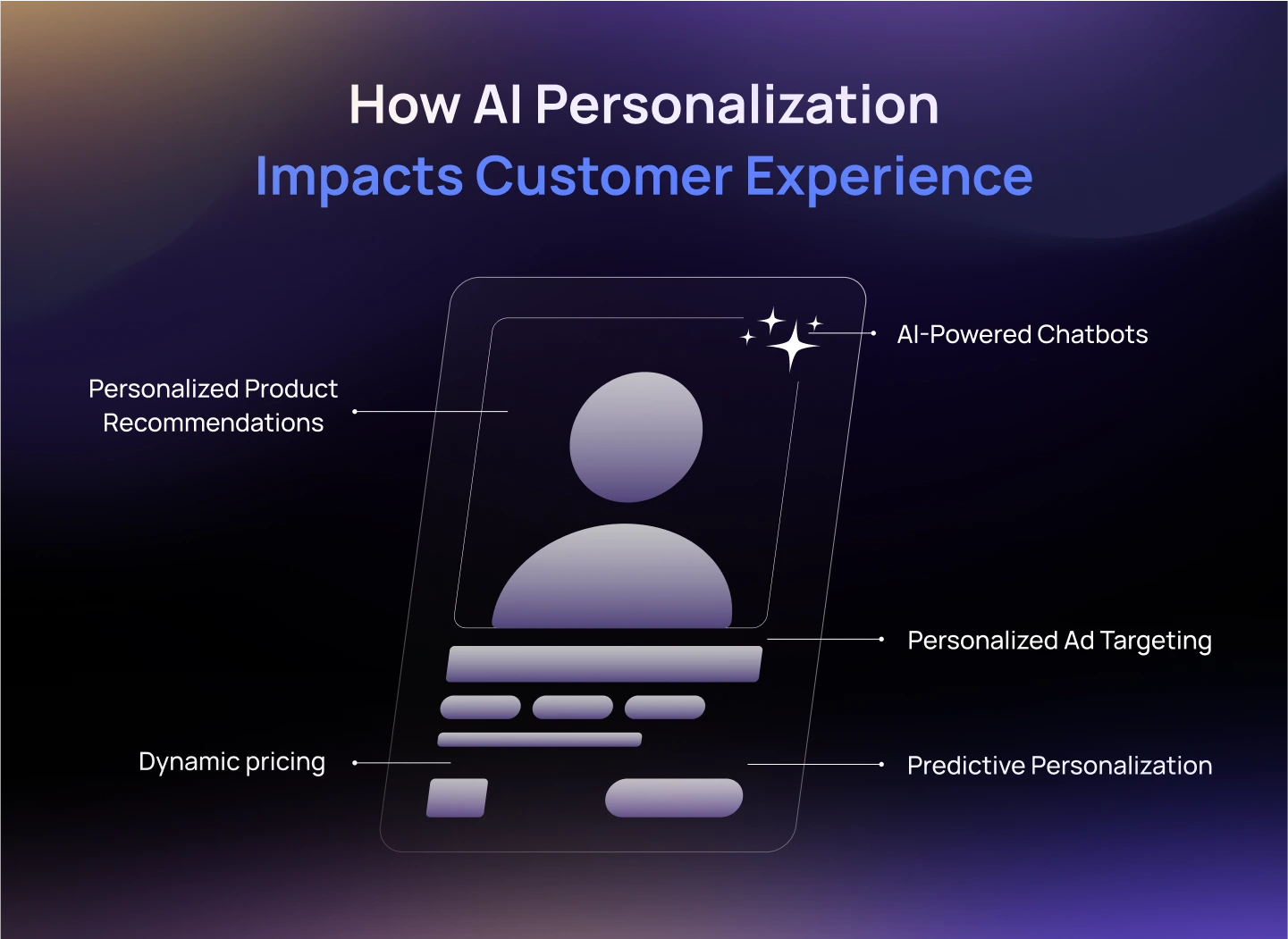
Personalization is now measurably tied to revenue: companies that excel at it generate significantly more revenue from those specific activities than slower-adopting competitors. AI personalization shows up across these key touchpoints:
AI collects data on browsing habits, past purchases, and preferences to suggest matching products. Amazon’s “you might also like” and “frequently bought together” sections, often powered by embedded AI agents, help increase conversion rates and average order values.
Traditional rules-based chatbots often frustrated users with rigid responses. Agentic AI-powered chatbots understand context, recall past interactions, and hold natural, human-like conversations in real time — acting like virtual shopping assistants that provide genuinely personalized guidance.
AI-powered ad personalization goes beyond demographic targeting, analyzing browsing patterns and contextual data to identify high-intent customers. AI continuously refines campaigns with real-time feedback, adjusting messaging, timing, and placement dynamically throughout the customer journey.
Instead of fixed pricing, AI uses machine learning to adjust prices in real time based on demand, competitor pricing, buying behavior, and market conditions. Repeat customers might see loyalty-based discounts, while price-sensitive shoppers see limited-time offers. Used irresponsibly, though, this can backfire — customers who feel unfairly charged based on personal data quickly lose trust.
Predictive AI personalization anticipates what customers want before they realize it themselves, analyzing past behaviors and interactions to identify hidden trends. In UI/UX design, this creates seamless, anticipatory experiences that feel intuitive rather than reactive.
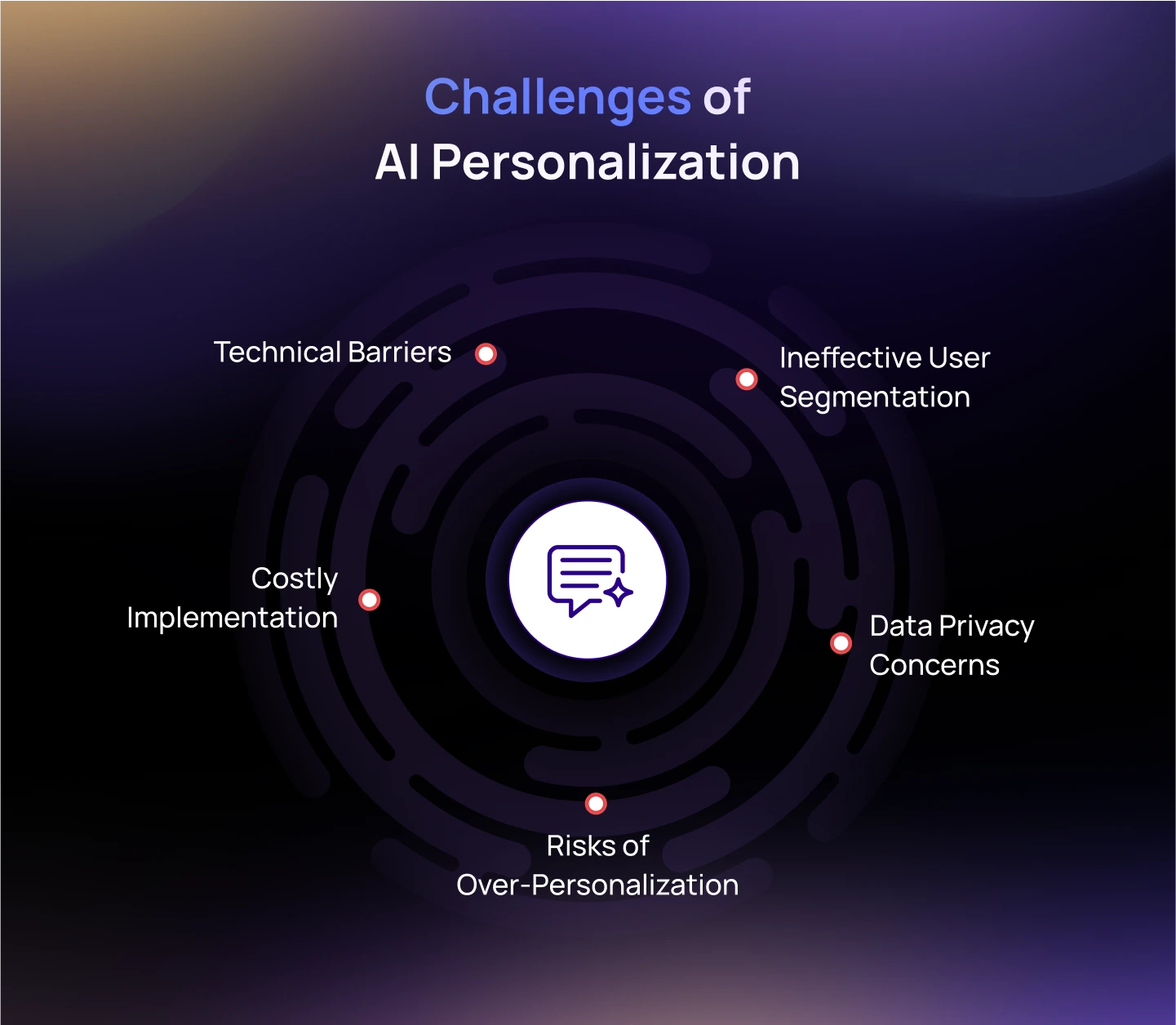
Segments that are too broad make personalization generic; segments too narrow lack the data to generate reliable insights. Maintaining useful segments requires constant refinement based on real-time behavior.
Suggestions: integrate diverse data sources across CRM, analytics, and social platforms; develop detailed customer personas; continuously test and refine segments based on performance.
As personalization depends heavily on data collection, ensuring privacy is a critical challenge. Many users don’t clearly understand how their data is collected or used — undermining trust and risking brand reputation.
Suggestions: strengthen security with encryption and regular audits; clearly communicate data usage policies; provide easy opt-in/opt-out options; regularly evaluate AI models for bias and fairness.
Overly specific or persistent content can make users feel their privacy is being invaded. AI systems that rely heavily on past behavior also risk creating a “filter bubble” that narrows the range of options users see, limiting engagement and market reach.
Suggestions: build recommendation systems that include variety beyond past behavior; give users control to customize or opt out; continuously monitor whether personalization stays helpful rather than intrusive.
AI personalization requires significant investment, a major barrier for SMBs — ongoing costs include data storage, model retraining, and infrastructure integration.
Suggestions: start with focused pilot projects to demonstrate value; leverage scalable cloud-based AI services to reduce upfront infrastructure costs.
Implementation demands specialized data science and ML expertise, and integrating AI into legacy systems can cause compatibility issues that increase cost and timeline.
Suggestions: build cross-functional teams combining data science, IT, and business units; adopt flexible, API-driven AI tools; partner with AI vendors or consultants to spread cost and access expertise.
AI personalization recommends or adjusts content based on patterns — the user still takes the action. Agentic personalization has an AI agent take the action itself, on the user’s behalf, based on established preferences.
Yes, if scoped correctly. Starting with a focused pilot on one high-impact touchpoint (like product recommendations or email personalization) and using cloud-based AI services rather than building infrastructure from scratch keeps upfront costs manageable.
AI personalization is now a critical driver of impactful customer experience, and the shift toward agentic personalization means it’s moving from suggesting to acting. In Design Thinking, this enables interfaces to be more dynamic and responsive to each user’s preferences and behaviors — but it also raises the bar for building trust and giving users real visibility into what AI is doing on their behalf.
If you’re seeking a trusted partner to build products that seamlessly integrate AI personalization, Lollypop is here to help. As a global UI/UX design studio powered by AI, we go beyond aesthetics — merging design thinking with emerging AI technologies to create future-ready, adaptive experiences that resonate deeply with users.
Get a free consultation and discover how we can help you design AI personalization your users actually trust.
Platforms like Spot by Lollypop help businesses streamline this process through AI-powered UX insights, behavioral analysis, and intelligent experience optimization.