
In today’s fast-moving SaaS landscape, standing out is more challenging than ever!
With industry leaders like Microsoft or Salesforce offering all-in-one solutions for businesses of all sizes and industries, startups and new entrants often struggle to compete head-on.
Rather than going wider, many are choosing to go deeper, focusing on the specific, underserved needs of individual industries. This specialized approach is precisely what Vertical SaaS is about—developing software tailored to address the unique challenges of specific markets.
In this blog, we will provide a clear overview of Vertical SaaS meaning, covering its definition, key benefits, main challenges, and real-world SaaS applications to help you better understand this specialized software model.
Vertical SaaS refers to software solutions designed specifically for the unique needs of individual industries. These platforms are equipped with tailored tools, workflows, and compliance features to address the distinct challenges each sector faces.
By focusing on a single industry, vertical SaaS delivers more relevant, effective solutions, helping businesses streamline operations, boost efficiency, and meet regulatory standards with greater ease.
After gaining a clear understanding of vertical SaaS, it becomes essential to compare it with another widely used model, horizontal SaaS. Grasping the key differences between these two approaches (horizontal vs vertical SaaS) will help you identify which software strategy best aligns with your business goals.
For ease of comparison, we’ve laid out these differences in a table:
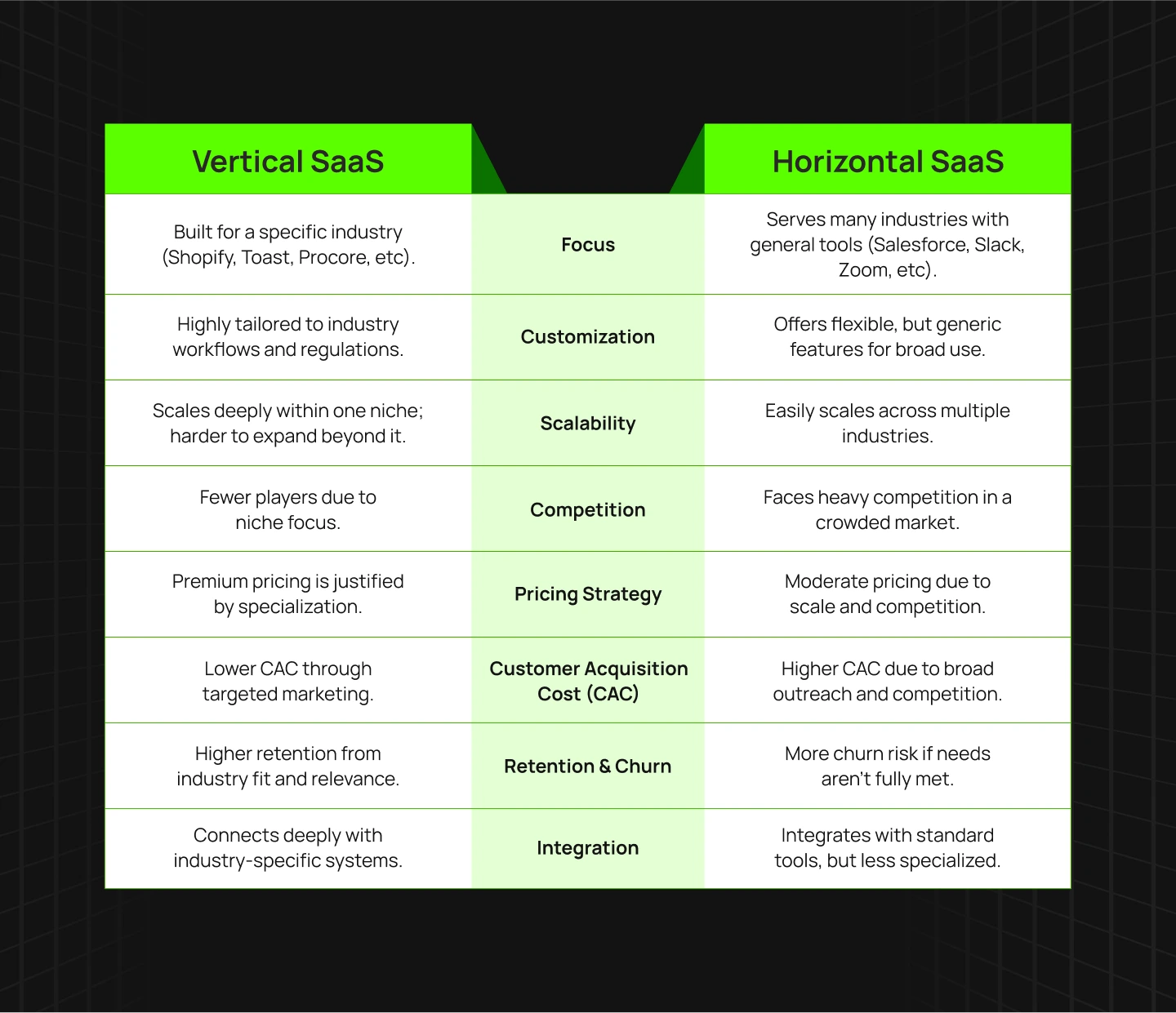
After reviewing the comparison, you may be asking yourself: Should you go with vertical SaaS vs horizontal SaaS?
The answer depends on your product vision, target audience, and long-term growth goals.
A saas verticals model may be the right choice if:
In contrast, if your goal is to serve a broad range of customers across various industries, a horizontal SaaS model will offer greater flexibility and scale.
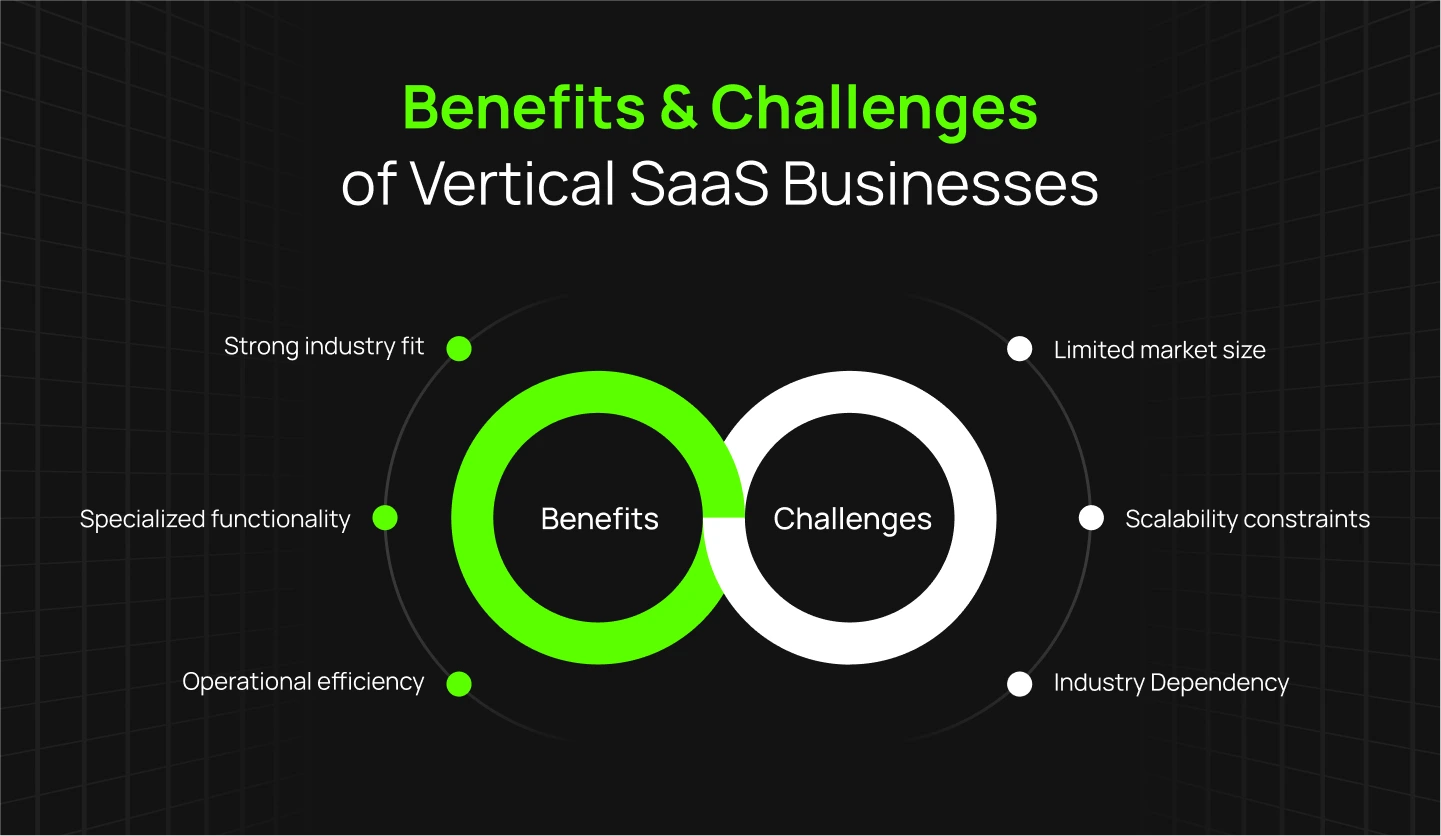
Developing a Vertical SaaS product provides numerous benefits for businesses that operate within specialized industries:
Although developing a Vertical SaaS product offers many benefits, it also comes with significant challenges for businesses:
To better understand how Vertical SaaS operates in practice, let’s look at five standout examples of vertical SaaS. Each of these platforms is built for a specific industry, with features tailored to that sector’s unique needs and workflows.
Procore is one of the top vertical SaaS companies, specializing in the construction industry. It offers a comprehensive suite of project management tools that integrate workflows such as scheduling, budgeting, quality control, and field collaboration into a single platform.
Key features:
Veeva Systems is a prominent B2B Vertical SaaS provider focusing on the life sciences industry. It offers cloud-based solutions for regulatory compliance, clinical trials, and quality management, tailored to meet the strict requirements of pharmaceutical and biotech companies.
Key features:
Toast combines a customer management system and a point of sale (POS) platform tailored exclusively for restaurants. Designed to support various restaurant types, the platform helps businesses manage teams, boost online growth, and improve customer retention.
Key features:
Shopify is a leading Vertical SaaS platform that empowers retailers to manage their e-commerce businesses across online channels and from anywhere in the world.
Key features:
Clio stands out as a leading Vertical SaaS platform specifically designed to meet the unique needs of law firms and judicial service providers. As one of the top SaaS software solutions, it offers comprehensive case management and tools to streamline daily office operations.
Key features:
Read more about other SaaS Design Trend: What is Micro SaaS? Your Guide to Niche Software Success
Generative AI is growing fast! According to Precedence Research, the global generative AI market was valued at $25.86 billion in 2024 and is expected to skyrocket $1,005 billion by 2034. This surge highlights the accelerating adoption of this technological advance. For Vertical SaaS companies, this is a big opportunity to improve their products and make operations more efficient.
Let’s look at how generative AI can benefit Vertical SaaS:
In summary, the integration of generative AI offers Vertical SaaS companies a powerful tool to differentiate themselves in the market. It not only adds advanced features to their solutions but also makes it harder for competitors to copy their products, establishing them as leaders in the AI-powered SaaS space.
Through this blog, you’ve explored the potential of the Vertical SaaS model, along with its unique advantages and challenges. While this approach allows you to build a product that deeply aligns with a specific industry, it also comes with trade-offs like limited market size and scalability hurdles. It’s important to weigh these factors carefully before starting your product development journey.
Planning your next big move and looking for a reliable SaaS design agency to support? At Lollypop, we don’t just design beautiful interfaces—we combine deep UI/UX expertise with the latest AI technologies to deliver end-to-end SaaS UX design solutions that drive real results.
Contact us for a FREE consultation and discover how we can help elevate your SaaS product to the next level.