This guide breaks down what AI agent frameworks are, how to choose the right one, and which frameworks actually matter in 2026 — updated to reflect the current state of each tool, not just a list of 2025 favorites.
Get a free 20-minute consult on how AI agents can fit into your product strategy.
AI agent frameworks are platforms, libraries, or SDKs that simplify the creation of automated, tool-using AI agents. Instead of hand-coding the agent loop — send a prompt, parse the response, call a tool, feed the result back, repeat — a framework gives you the plumbing already built: memory, tool-calling, retries, and coordination between multiple agents.
Low-code platforms suit non-technical teams; graph-based frameworks like LangGraph give you fine-grained control over branching logic and state — at the cost of more orchestration code to write.
Check whether the framework has native support for the Model Context Protocol. This has become the standard way agents connect to external tools and data sources, and frameworks without it require more custom integration work.
Look for built-in guardrails, encryption, and compliance support (GDPR, HIPAA) — especially important as more agents run with real autonomy in production.
Strong docs and community support reduce onboarding time significantly — a real differentiator between frameworks with similar feature sets.
Choose a framework proven to handle production load, both vertically (more resources per agent) and horizontally (more concurrent agents).
| Framework | Best For | Language | MCP Support |
|---|---|---|---|
| LangGraph | Stateful, production multi-step workflows | Python, TypeScript | Yes |
| CrewAI | Role-based multi-agent teams, rapid prototyping | Python | Yes |
| OpenAI Agents SDK | Lightweight, OpenAI-native production apps | Python, TypeScript | Yes |
| Google Agent Development Kit (ADK) | Gemini and Google Cloud–native agents | Python, Java | Yes |
| Microsoft Agent Framework | Microsoft / .NET and Azure teams | Python, C# | Yes |
| Pydantic AI | Type-safe Python applications | Python | Yes |
| LlamaIndex | Data-heavy and RAG-focused agents | Python, TypeScript | Yes |
| N8N | No-code / visual workflow automation | No-code | Via nodes |
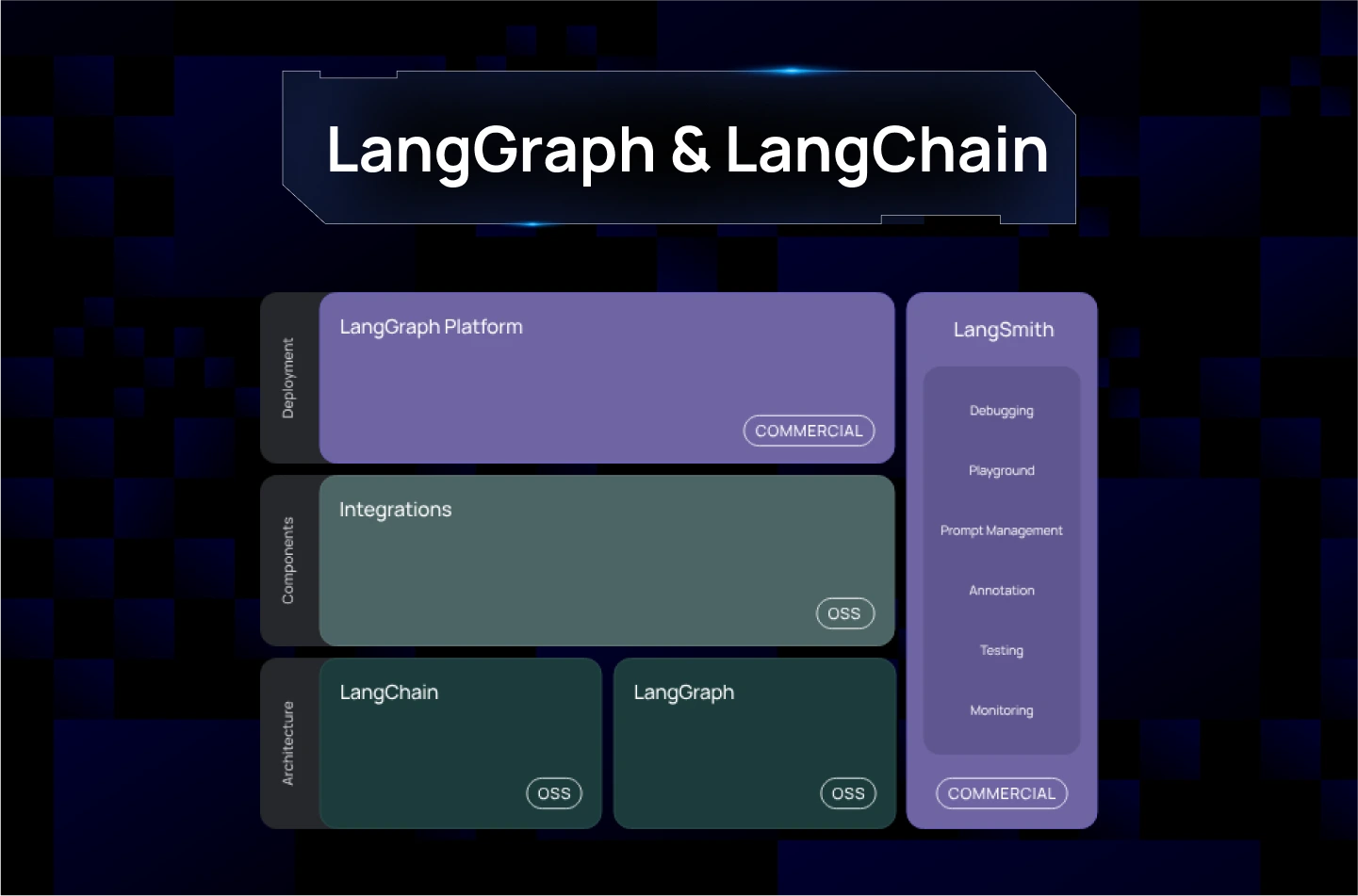
Built by the LangChain team, LangGraph models agent workflows as directed graphs, giving developers fine-grained control over state, branching logic, and long-running processes. It’s become the go-to choice for teams that need durable, observable production agents rather than quick prototypes.
Core features:
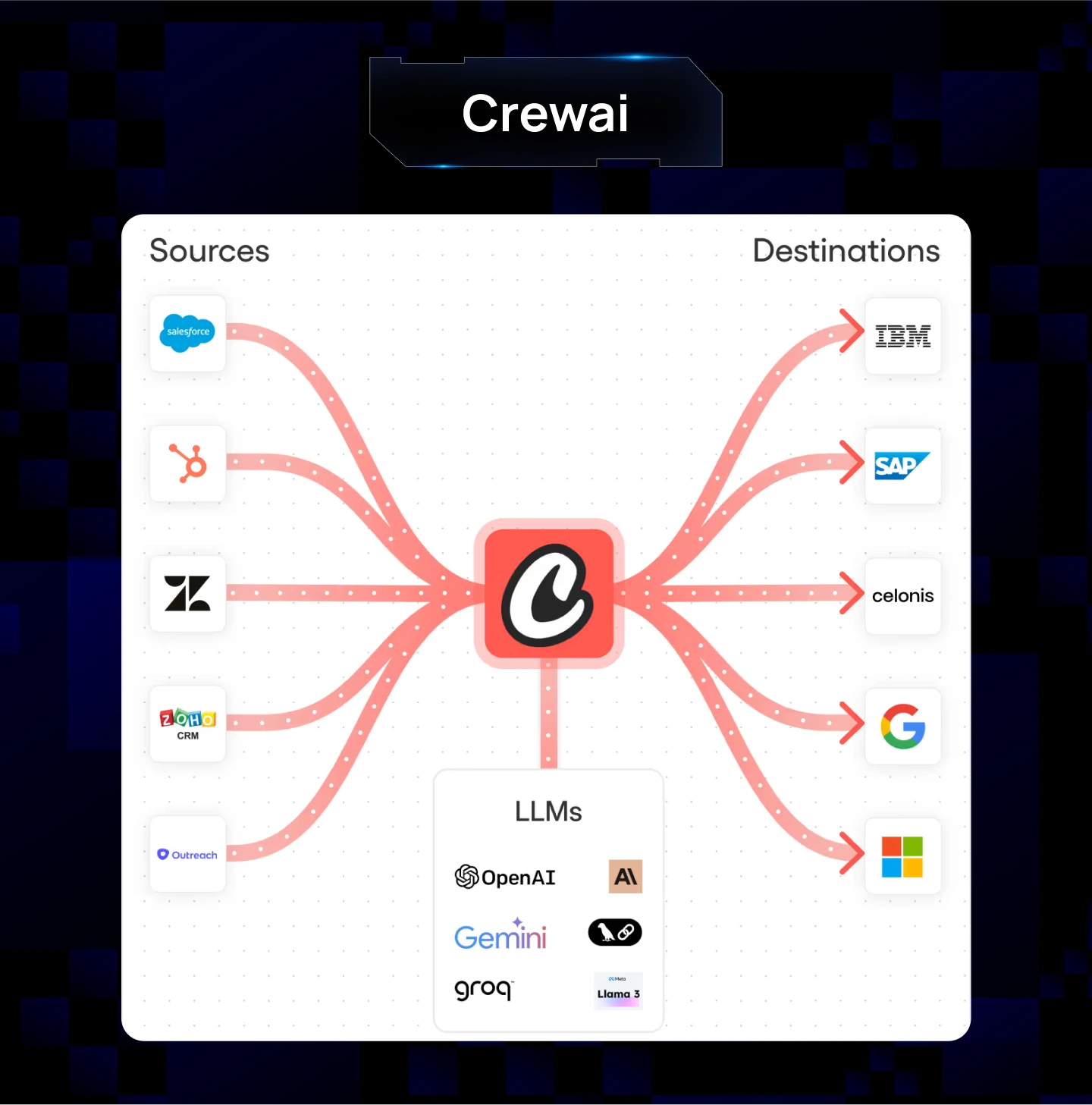
CrewAI is an open-source framework for building autonomous multi-agent systems where each agentic AI is assigned a specialized role and collaborates to complete complex tasks — inspired by real-world team structures.
Core features:
The OpenAI Agents SDK is OpenAI’s production-ready framework for agentic applications — the official successor to Swarm, OpenAI’s earlier experimental prototype (deprecated in 2025). It keeps the handoff model developers liked about Swarm and adds the production essentials Swarm never had.
Core features:
Google’s Agent Development Kit is built for teams already invested in Gemini models and Google Cloud infrastructure, offering tight integration with Google’s AI ecosystem and native multi-agent orchestration.
Core features:
The framework picks the plumbing. Great design picks whether users actually trust and adopt your AI agent. Let’s talk about the experience layer.
With AutoGen — one of the original multi-agent frameworks — now largely in maintenance mode, Microsoft Agent Framework has become Microsoft’s actively developed answer for enterprise agent orchestration, particularly for teams on Azure and .NET.
Core features:
Pydantic AI brings the type-safety Python developers already know from the Pydantic data validation library into agent development, making it a favorite for teams that prioritize reliability and structured outputs.
Core features:
LlamaIndex started as a data framework for retrieval-augmented generation and has expanded into a full agent framework, making it a strong pick when your agent’s core job is finding and reasoning over large amounts of data.
Core features:
N8N is an open-source workflow automation platform with 400+ built-in integrations, letting both technical and non-technical teams build agent-powered automations through a visual, drag-and-drop interface.
Core features:
There’s no single best option — LangGraph leads for controlled, production-grade workflows, CrewAI leads for fast multi-agent prototyping, and OpenAI Agents SDK is the top pick for lightweight, OpenAI-native applications.
Swarm was OpenAI’s experimental prototype and has been officially replaced by the OpenAI Agents SDK, which adds production features like guardrails, tracing, and sessions. New projects should start with the Agents SDK.
MCP is a standardized way for AI agents to connect to external tools and data sources. Most major frameworks now support it natively, which reduces custom integration work when connecting agents to your existing systems.
AutoGen pioneered multi-agent conversation patterns, but it’s now largely in maintenance mode. Microsoft’s newer Microsoft Agent Framework has taken over as the actively developed option for Microsoft-ecosystem teams.
Agentic AI is no longer a buzzword — it’s actively reshaping how businesses approach task automation and operational efficiency. Choosing the right AI agent framework in 2026 comes down to matching the tool to your team’s stack, your need for multi-agent orchestration, and how much control you need over execution.
Need guidance along the way? Lollypop is here to support. As a global UI/UX design agency with deep expertise in AI adoption, we apply design thinking and AI innovation to craft solutions that are user-centric, intelligent, and ready for the future.
Get a free consultation on how AI agents and agentic workflows can fit into your product strategy — and how to design experiences users actually trust.
As AI agents become more integrated into modern digital products, intuitive, human-centered experiences are essential for adoption and long-term success. Discover how SPOT by Lollypop helps businesses design smarter AI-powered products, agentic workflows, and next-generation user experiences.