
“Design won’t help you get the revenue” is a thought process that is no longer applicable today. If you want to stand out, attract more customers, and grow your business, design is one of the key cogs.
Design influences the way a product looks, feels, and works, and people stay, buy, return, or leave. Great UI and UX are not just about visuals. They impact how users feel when they interact with a product. When the experience is simple, intuitive, and trustworthy, customers are more likely to engage, convert, and stick around. And that directly affects revenue.
This article traverses how thoughtful UI/UX design contributes to business revenue growth, backed by real examples and practical strategies you can apply.

Retaining customers is cheaper than acquiring new ones. How do you do it? It is by providing an exceptional user experience (UX) to keep customers engaged. A definitive role of UX.
A neatly designed website or app makes users feel comfortable, valued, and heard. This generates more business ROI and conversion optimization.
Below are the essential business metrics that answers your question, “how the role of user experience contributes to business growth.”
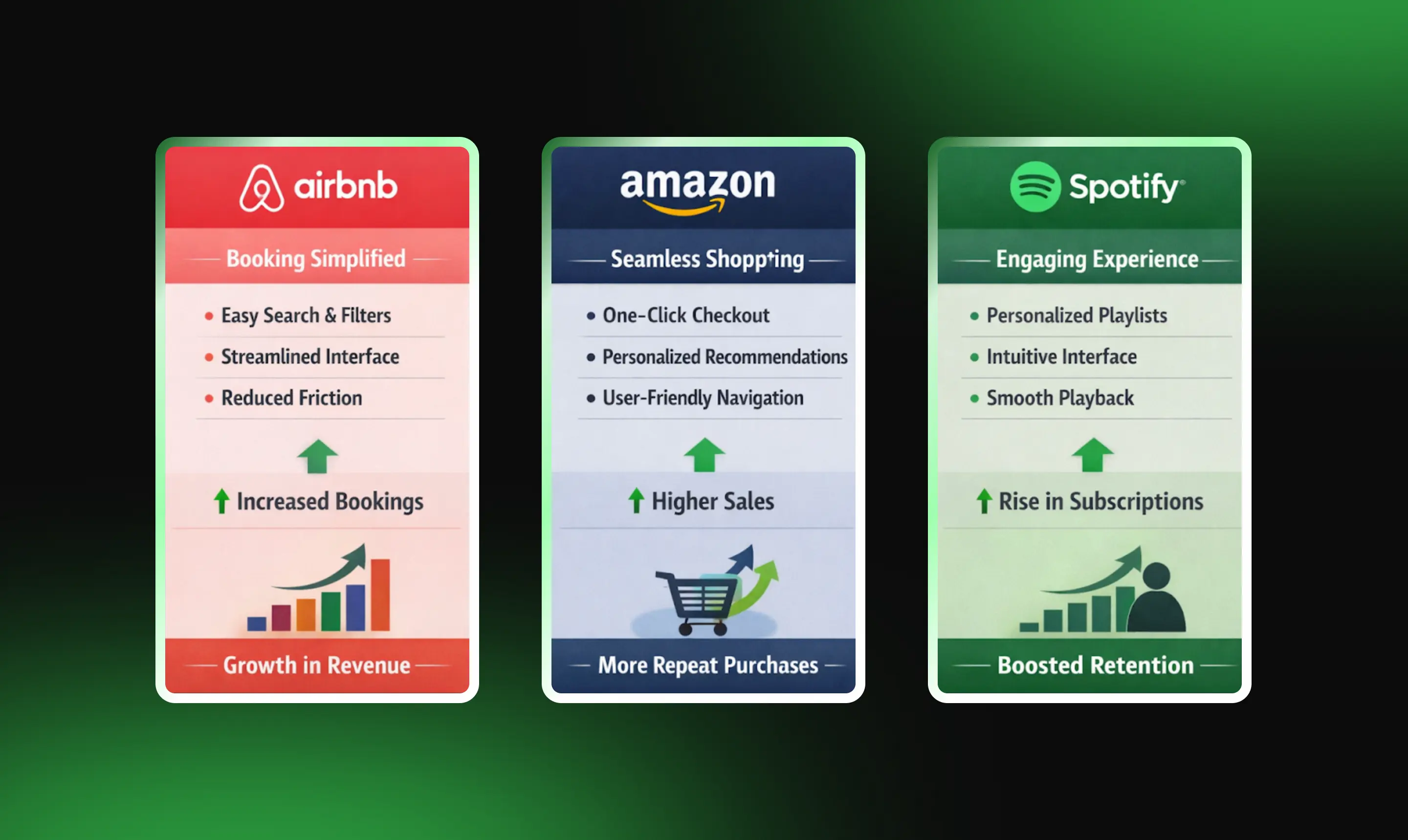
The effect of business-driven UI/UX design is seen by many businesses. Below are such examples of increased revenue via UI/UX
To improve the booking experience, Airbnb made significant alterations to its UX design. What they did? They simplifying the search process and offered more user-friendly features. This has not only enhanced user satisfaction but also increased bookings. Thanks to these changes, they saw a noticeable increase in revenue growth.
2. Amazon:
UI/UX optimization is driving revenue at Amazon, till today. Customer journey such as instant checkout process, personalized product recommendations, and easy-to-navigate platform ensured a great user experience, making, customers stay longer, increasing the likelihood of conversions and repeat purchases for long-term.
Everyone loves Spotify. Why? Because of Spotify’s personalized playlists and thoughtful interface. It follow a UX-driven growth strategy to keep users engaged, enjoy songs, and explore podcasts from different part of the world. They prioritized the user experience, and managed to increase their subscription rates significantly. A rate other OTT platforms strive for.
These case studies showcases how businesses with a robust UI/UX strategy are more likely to succeed in competitive markets.
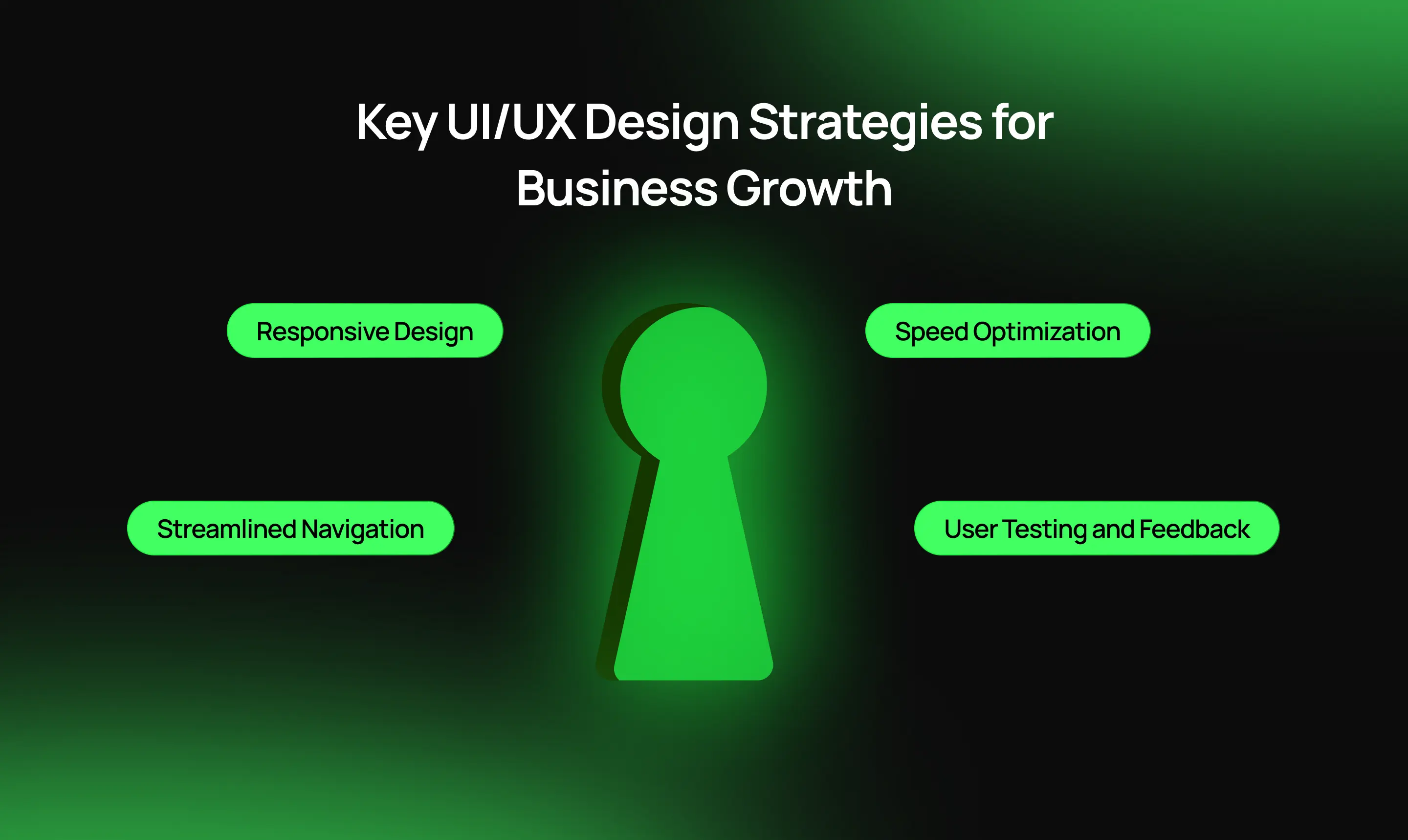
We have 5 key strategies that have proven successful.
1. Responsive Design:
If your website breaks on a smartphone, you have lost 50% of your audience before the page even loads. Responsive design is a survival requirement, not a feature. A responsive design ensures a smooth experience on all kinds of screens for customers. The better the experience, the merrier the UX impact on revenue.
2. Streamlined Navigation:
An easy-to-navigate website builds a higher recall value. Simple menus, clear call-to-action buttons, and proper organization can help users quickly go through desired actions, like purchasing or signing up.
3. Speed Optimization:
You have a great website, but it is not loading, making the user experience worse. Slow load time leads to frustration and higher bounce rates. People will wait for 5 seconds and if website doesn’t load, they will switch to new one. So, investing in performance optimization is a right choice you can make for a seamless user experience.
4.User Testing and Feedback:
Feedback is the way forward for businesses. Conduct usability tests to identify pain points in your design and experience. The data will give you insights into what is working and what is not. This data will help you make the right decision and increase retention and conversion rate.
5. Designing for Preference (Nuance):
When you design using anticipatory design principles and delightful micro-interaction nuances, it will make you stand out from crowd. Predicting a user’s needs before they ask and adding small, polished interactions creates an emotional connection and a sense of premium quality with uses. They feel connected. When applied carefully nuances can transform your product from a simple utility to a preferred brand that users choose over your competitors.
At Lollypop Design Studio, we’ve always believed that research is the only real antidote to guesswork. We don’t just ‘optimize’ layouts; we dig into the data to find exactly where users are dropping off and why. Over the years, we’ve partnered with brands across every major industry to turn those friction points into revenue drivers.
Our philosophy is simple: if a design doesn’t make a business more defensible and scalable, it isn’t finished. We count on a process of constant testing and human-centered refinement to ensure every pixel serves a purpose.
The results: our recent e-commerce overhaul delivered a 35% jump in conversion rates. That’s the real-world impact of putting the user first: it doesn’t just look better; it performs better
Investing in customer experience lets users perceive you. If the experience is simple, intuitive, and rich with thoughtful nuances, they stay, come back, and recommend it to others.
A great UI/UX is more than an aesthetic choice. It is a strategic business step that impacts your ROI. Optimizing elements, like visuals, navigation, micro-interactions, and responsive design for all types of screens, increases retention rate, users feel more connected, and allowing them to make a quick descision such as a purchase or share, building brand loyalty.
Focusing on UI/UX strategy, creates more enjoyable experience for customers. Bottom line, revenue is increased and you see profound impact across the business.
Want design that pays for itself? Our UI/UX design services are built around research and measurable ROI.