
Webflow’s published The 2025 State of the Website report brings exciting insights! After surveying 500 marketing leaders across the US and Canada, a striking 91% confirmed that their website drives more revenue than any other marketing channel. This highlights a crucial fact: In today’s competitive digital landscape, websites remain the foundation of trust, loyalty, and business growth.
However, your website’s potential ROI will not become a reality unless the product is fully optimized and provides a seamless user experience. There is only one way to ensure this: conduct regular website audits and continuous optimization!
In this guide, we’ll explore the aspects that website audit covers, exploring how to audit a website through standard checklists and a list of website audit tools. Let’s get started!
A website audit is a comprehensive assessment of a site’s performance across various dimensions, including usability, accessibility, SEO, content, and security. It is typically conducted before major design or content changes are implemented, serving as a benchmark against industry standards. The audit’s goal is to identify areas for improvement, address existing issues, and ensure that the website effectively meets both user needs and business objectives.
A comprehensive website audit covers 7 core aspects:
In the following sections, we will discuss these 7 website audits to help you conduct a comprehensive website audit practice.
A website audit helps businesses understand how effectively their digital presence supports user needs, business goals, and search visibility. Over time, websites accumulate technical issues, outdated content, inconsistent user experiences, and performance bottlenecks that can negatively impact engagement and conversions.
Regular website audits provide a structured way to identify opportunities for improvement across multiple dimensions, including usability, SEO, accessibility, and site performance.
A comprehensive website audit can help organizations:
Rather than treating audits as one-time activities, organizations should view them as an ongoing process that helps websites evolve alongside user expectations, technology changes, and business objectives.
Website audits should be performed regularly to ensure that digital experiences remain effective, secure, and aligned with business goals.
The ideal audit frequency depends on website size, update frequency, and business requirements:
Organizations should also consider conducting audits when:
Regular audits help teams proactively identify issues before they impact user satisfaction or business outcomes.
A website audit is a comprehensive evaluation of a website’s performance, usability, content, and technical health. While the scope varies depending on business goals, most website audits include several key components.
This includes analyzing website speed, crawlability, indexing, Core Web Vitals, broken links, structured data, and mobile responsiveness.
SEO audits evaluate metadata, keywords, content quality, internal links, search visibility, and on-page optimization opportunities.
UX audits assess navigation, information architecture, design consistency, interaction patterns, and user journeys.
Accessibility reviews identify barriers that may affect users with disabilities and evaluate compliance with modern accessibility standards.
This involves analyzing forms, calls-to-action, landing pages, and conversion pathways to improve business outcomes.
Together, these elements provide a holistic understanding of how effectively a website supports both users and business objectives.
At Lollypop, website audits go beyond technical analysis to examine how digital experiences support user needs and business goals.
Our audit framework combines design thinking, usability principles, technical evaluation, and performance insights to uncover opportunities for improvement.
The process typically includes:
Understanding business objectives, target audiences, and key performance indicators.
Evaluating navigation, user flows, information architecture, and interface consistency.
Reviewing speed, responsiveness, Core Web Vitals, SEO fundamentals, and technical health.
Assessing content effectiveness, readability, accessibility, and engagement.
Delivering actionable insights and improvement opportunities based on impact and implementation effort.
This approach helps organizations create websites that are not only technically optimized but also intuitive, accessible, and aligned with user expectations.
A thorough website audit covers 7 key areas to ensure optimal performance, usability, and security. In this section, we will deep dive into these 7 types of website audit, providing a standard checklist and best website audit tools for each to help you effectively evaluate and optimize your website.
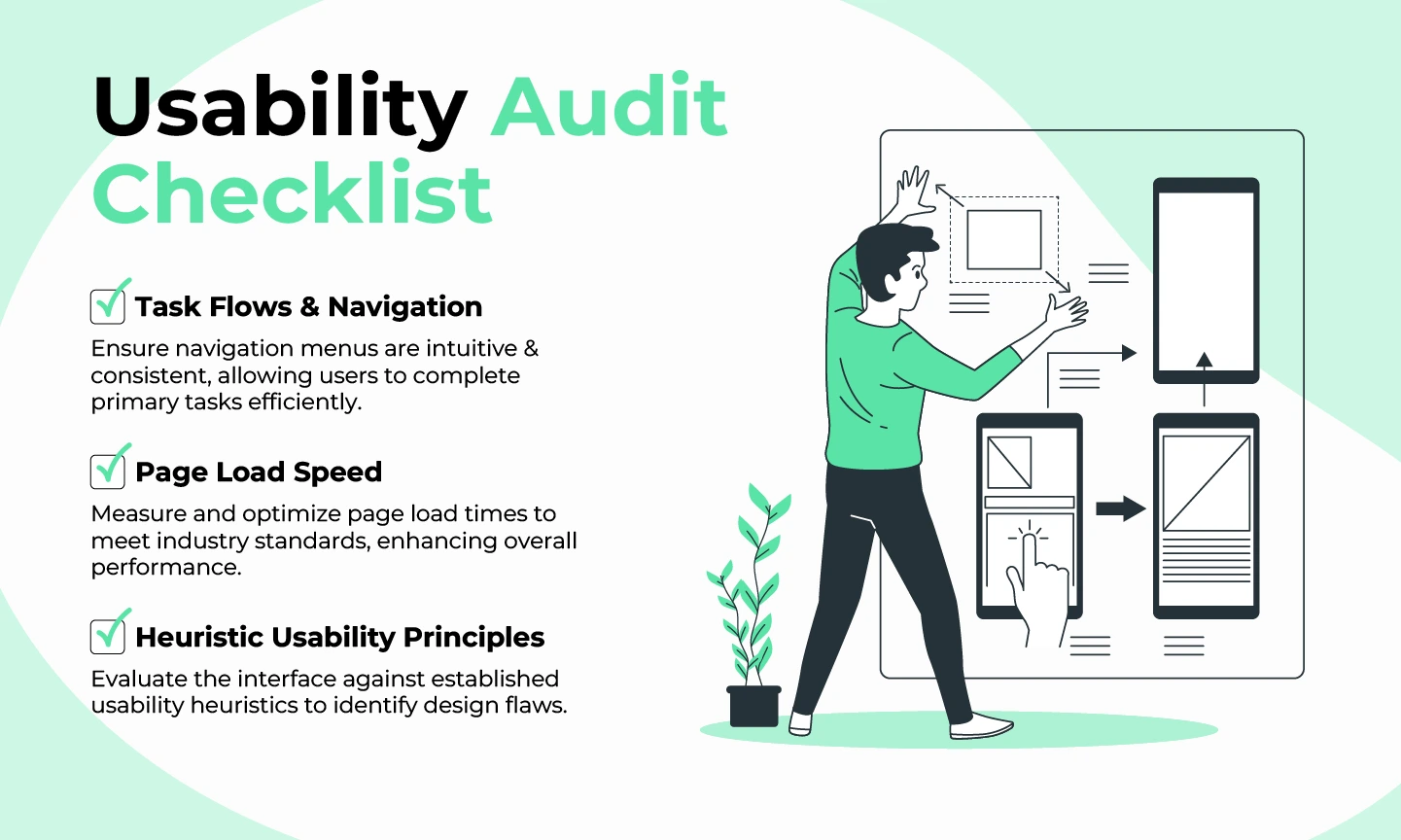
Usability Audit evaluates how easily and efficiently users can navigate a website and complete key tasks. It helps identify friction points, improve task flows, and enhance overall user experience.
Standard Checklist:
Recommended Tools:
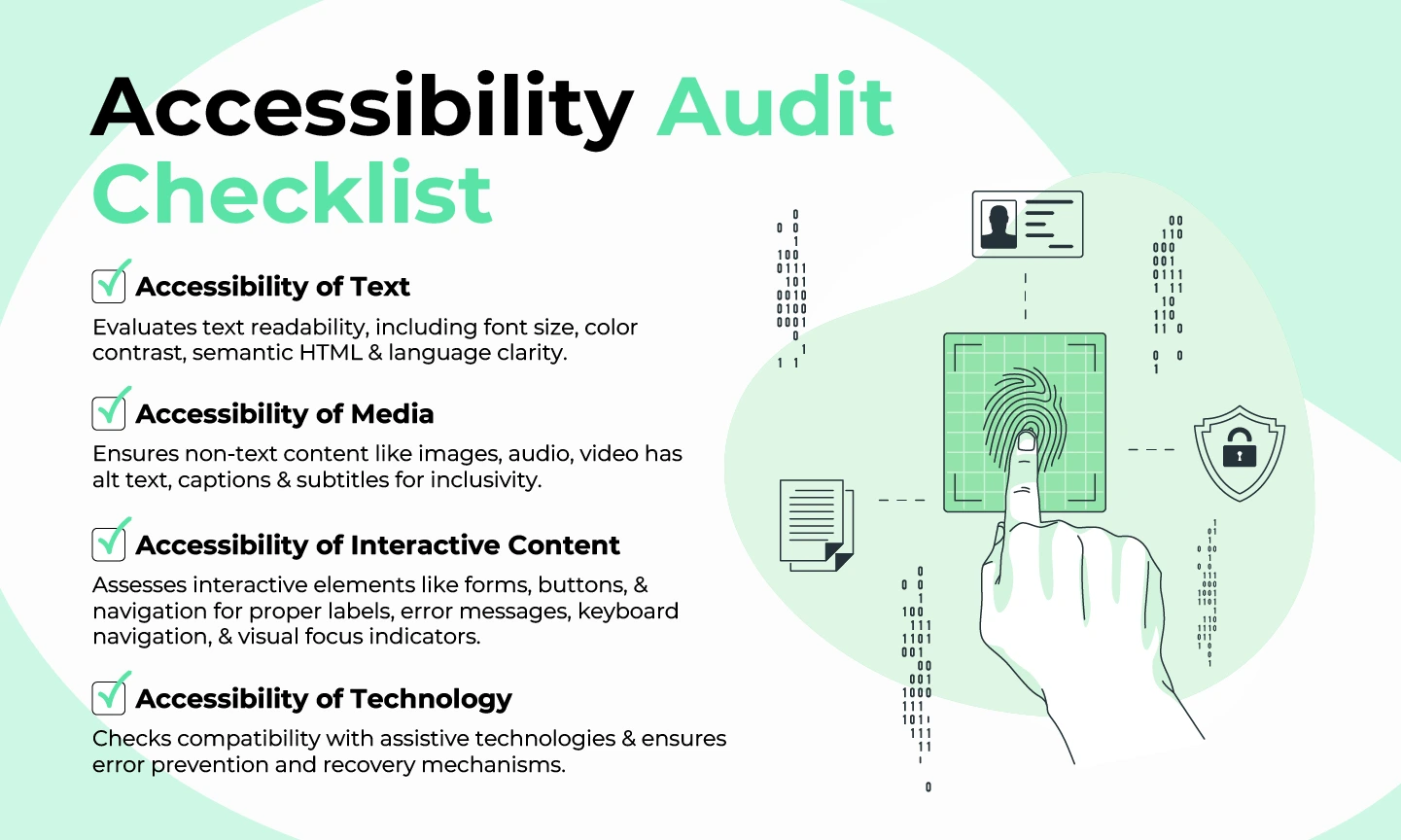
Accessibility Audit ensures that all users, including those with disabilities, can fully interact with the website. It helps improve inclusivity by identifying barriers in navigation, readability, and assistive technology compatibility.
Standard Checklist:
Recommended Tools:
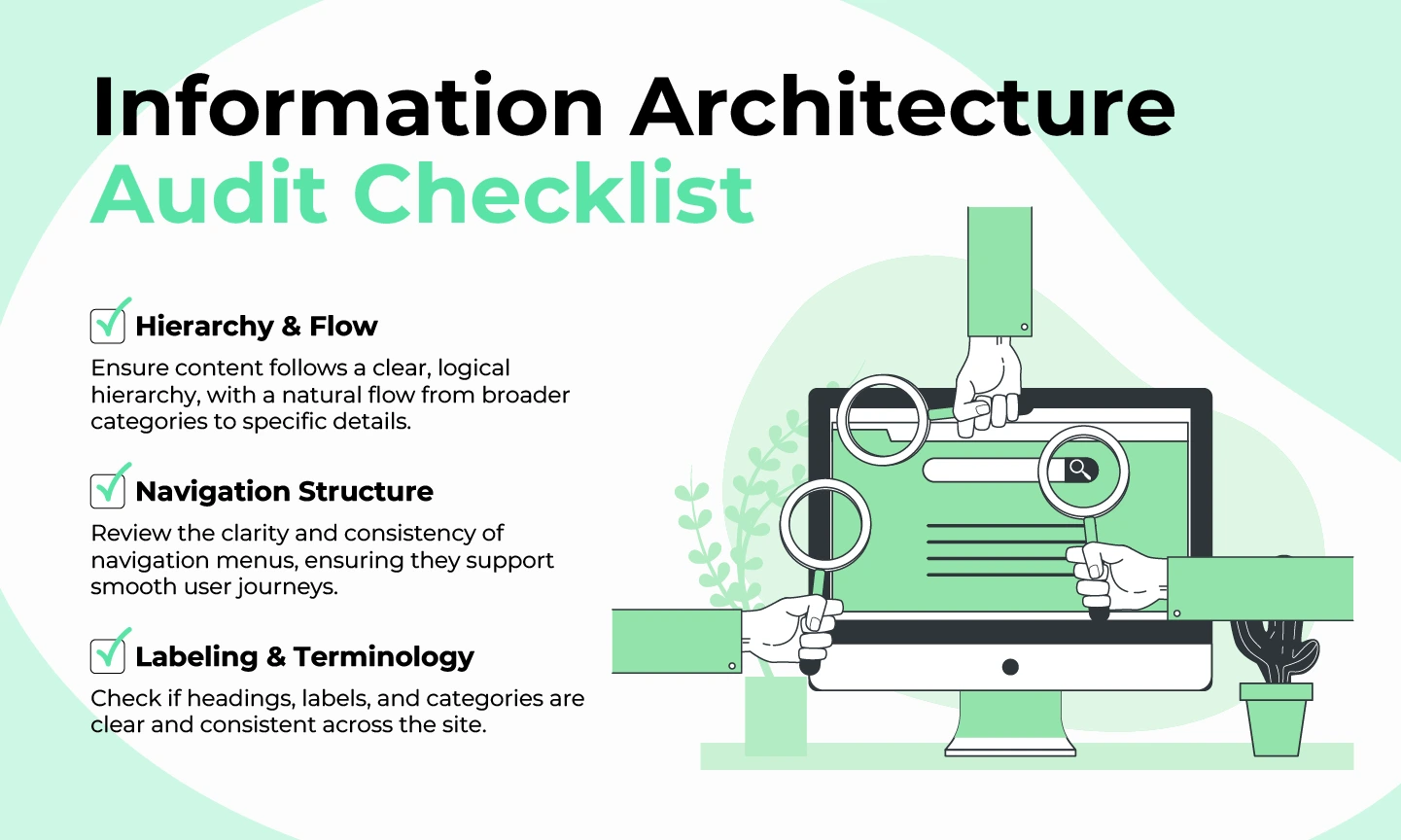
Information Architecture Audit focuses on evaluating how content is organized and structured to ensure users can easily find and navigate through it. It helps optimize menu structures, content labeling, and user journey mapping to improve content discoverability.
Standard Checklist:
Recommended Tools:
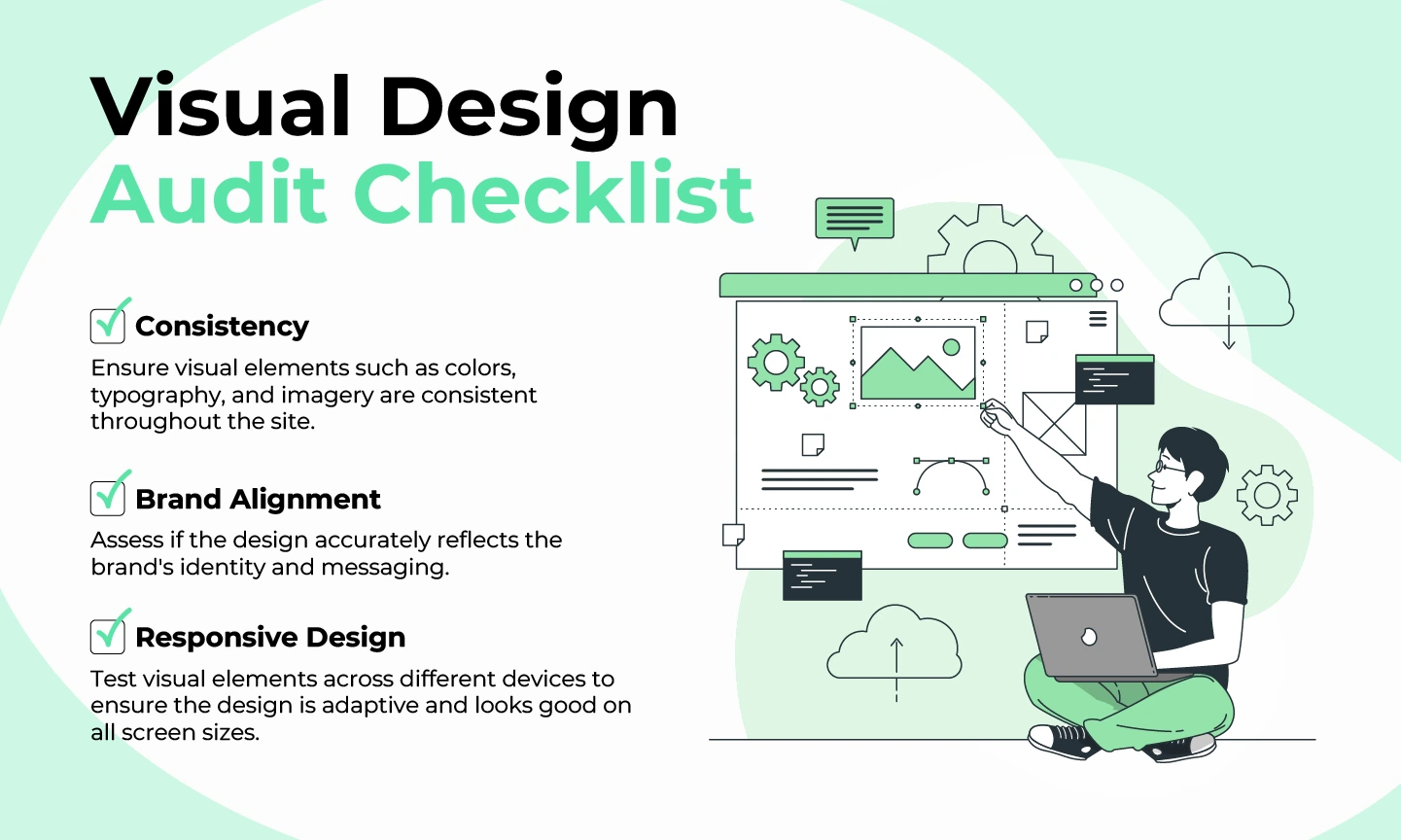
Visual Design Audit evaluates the aesthetic aspects of the website to ensure consistency, usability, and brand alignment. It helps enhance user engagement by reviewing design elements like typography, color scheme, imagery, and responsiveness.
Standard Checklist:
Recommended Tools:
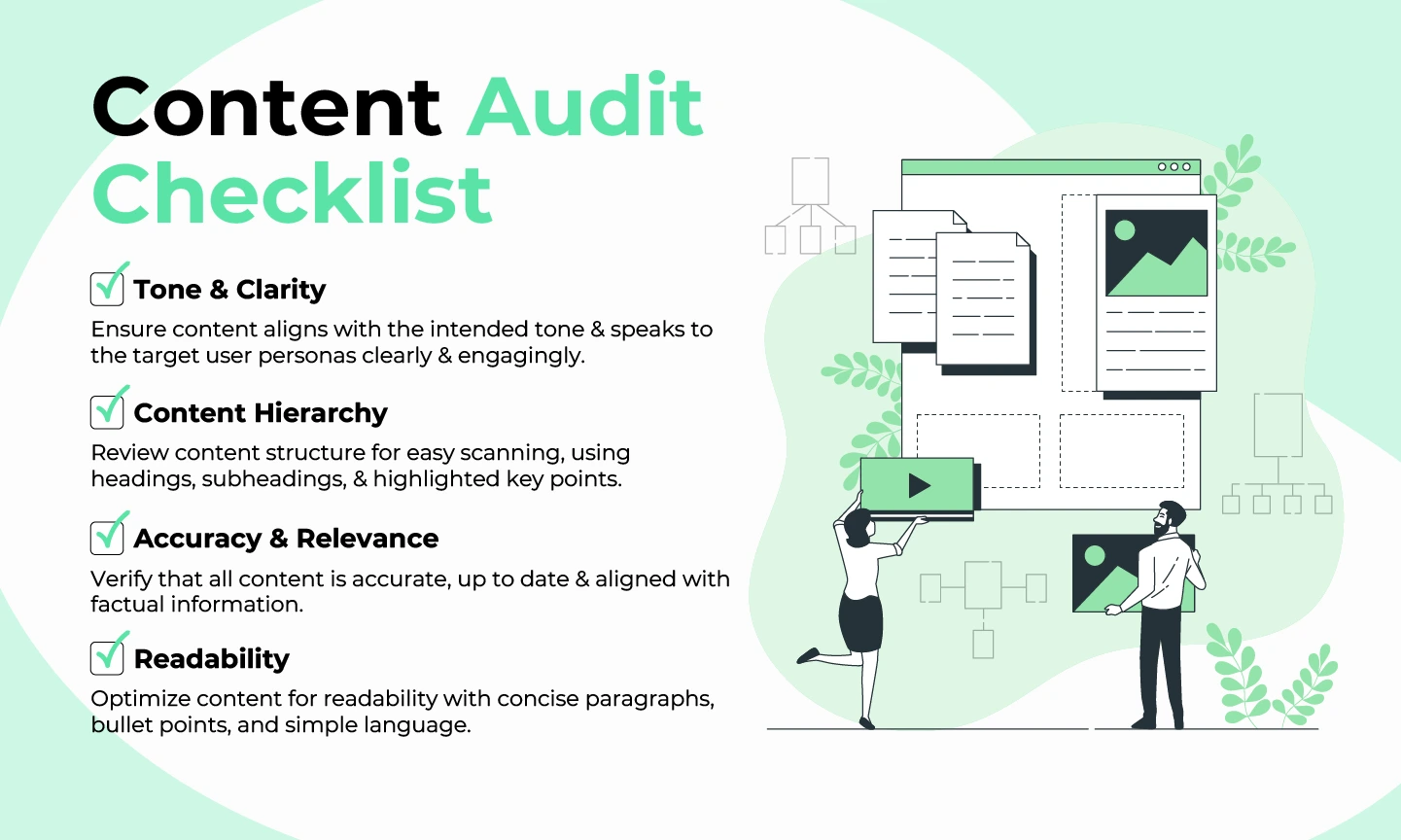
Content Audit assesses the effectiveness and clarity of the website’s content, ensuring it aligns with user needs and personas. It helps optimize content structure, tone, and messaging for better engagement and readability.
Standard Checklist:
Recommended Tools:
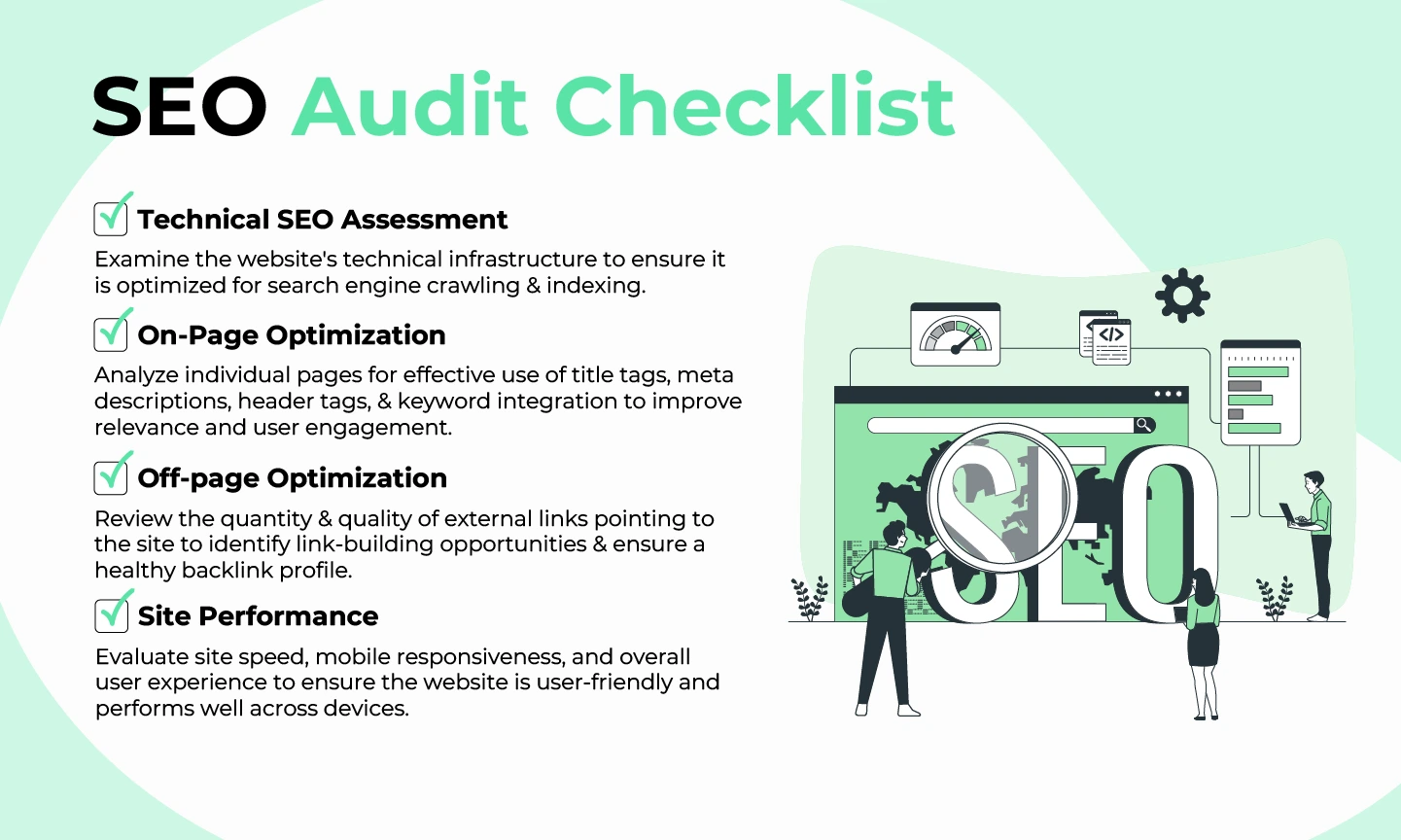
SEO Audit evaluates the website’s optimization for search engines, ensuring visibility and better ranking. It helps identify on-page, technical, and content issues that affect SEO performance.
Standard Checklist:
Recommended Tools:
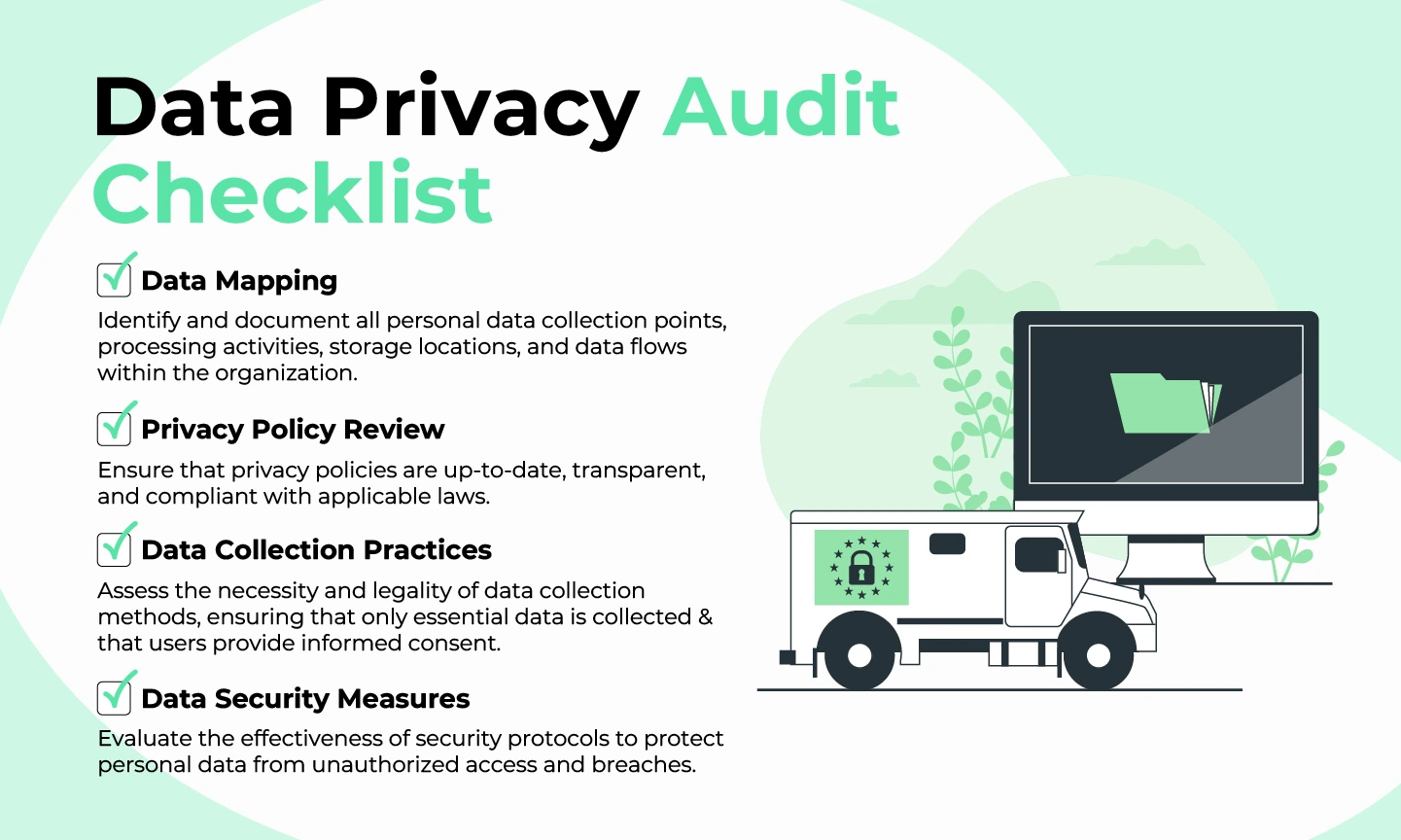
Data Privacy Audit ensures the website complies with data protection regulations and implements best practices for user privacy and security. It helps protect user data and builds trust by verifying the transparency and security of data handling practices.
Standard Checklist:
Recommended Tools:
In this blog, we’ve explored the seven key types of website audits, covering essential checklists and recommended tools to help you evaluate and optimize your site. However, website audits are not a one-time task—they should be conducted regularly to keep your site updated, secure, and free from performance issues. Regular audits help enhance user experience, improve SEO, and maintain overall website health, leading to Conversion Rate Optimization (CPO).
If you’re seeking a UX Audit service provider to assess and enhance your digital product, our team of usability experts is here to deliver in-depth UX Audits tailored to your specific needs!
As a leading UI/UX design studio, Lollypop specializes in UX research, product design, and development across various digital platforms. Our expertise ensures that your digital solutions are visually compelling and user-centric.
Partner with us to elevate your digital products and create seamless user experiences that drive engagement and success!
You may want to read about: 15 Best UX Audit Tools Toward Optimizing User Experience in 2025
A website audit helps identify issues related to usability, accessibility, SEO performance or security compliance. By regularly auditing websites and addressing potential issues, businesses can boost search rankings, increase engagement, enhance site speed, and ensure data privacy compliance, ultimately leading to better conversions and overall website performance.
Website audits should be conducted at least every 6 months to ensure optimal performance, security, and compliance. However, for fast-changing industries or websites with frequent updates, more frequent audits (e.g., quarterly) may be necessary to identify issues promptly and stay ahead of trends.
After auditing a website, it’s essential to analyze the findings to identify areas for improvement, prioritize issues based on their impact, and develop an action plan to address them. Implement the necessary changes, monitor their effects on performance and user experience, and continuously optimize your website to maintain its effectiveness and relevance.
The main difference between auditing a regular website and an e-commerce website lies in the focus areas. For a regular website, audits typically concentrate on content, SEO, site performance, and overall user experience. However, an e-commerce website audit goes deeper by evaluating additional elements such as the shopping experience, product pages, checkout process, inventory management, and security protocols like SSL certificates and payment gateway compliance. E-commerce sites also require more attention to merchandising strategies, ensuring product descriptions are optimized for both search engines and customers.