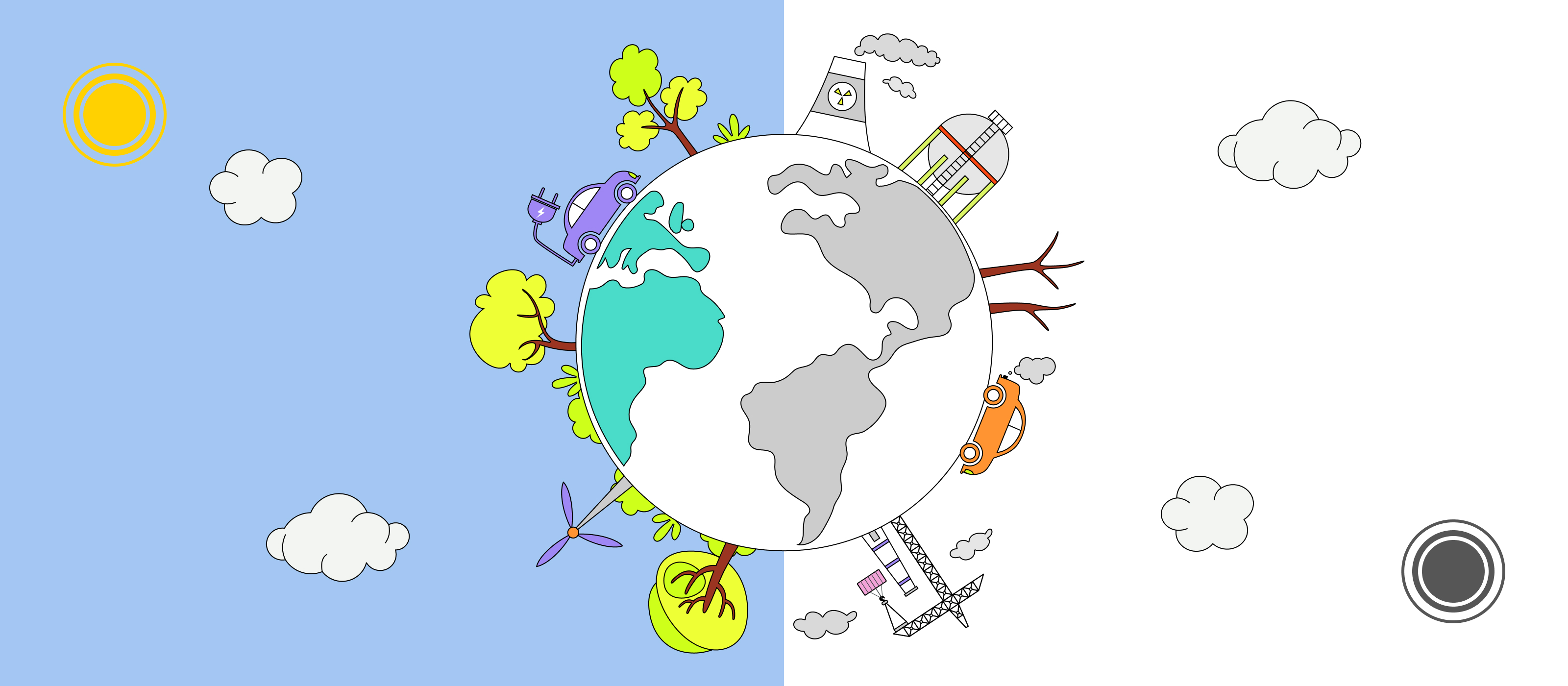

To be young and aware is to know you’re being lied to; to know that a bright green future is possible; to know that we can reimagine the world, rebuild our cities, redesign our lives, retool our factories, and incorporate sustainable UX/UI design. We can distribute innovation and creativity and all live in a world that is not only better than the alternative but much better than the world we have now.” — Alex Steffen
What connects every person ever born? We all share this planet, our home, Earth. Sadly, we’re not just living on it but slowly destroying it. Everything we do leaves a mark on our planet — whether it’s streaming a movie on Netflix, scrolling through websites, or enjoying music on Spotify, each action comes with an environmental cost.
Consider this: according to Website Carbon, viewing a single web page produces an average of 1.76 grams of CO2. Browsing through 10 web pages emits as much carbon dioxide as driving a car for over a kilometer. As awareness about internet pollution increases, sustainable UI/UX design isn’t merely a choice anymore — it’s an obligation for designers and the businesses that hire them. We hold the power to shape a digital world that either contributes to Earth’s destruction or supports its preservation.
Quick answer: Sustainable UI/UX design (also called green UX or environmental UX design) is the practice of designing digital products to minimize energy consumption, data transfer, and carbon emissions — through lighter interfaces, efficient code, dark-mode-friendly color schemes, and accessible, minimalist layouts. It reduces a website’s carbon footprint while often improving load speed, usability, and conversion.
The term “sustainability” was initially introduced at the first United Nations Conference on the Environment in 1972, but was solidified in 1987 by the Brundtland Report (“Our Common Future”), which also articulated the objectives of sustainable development.
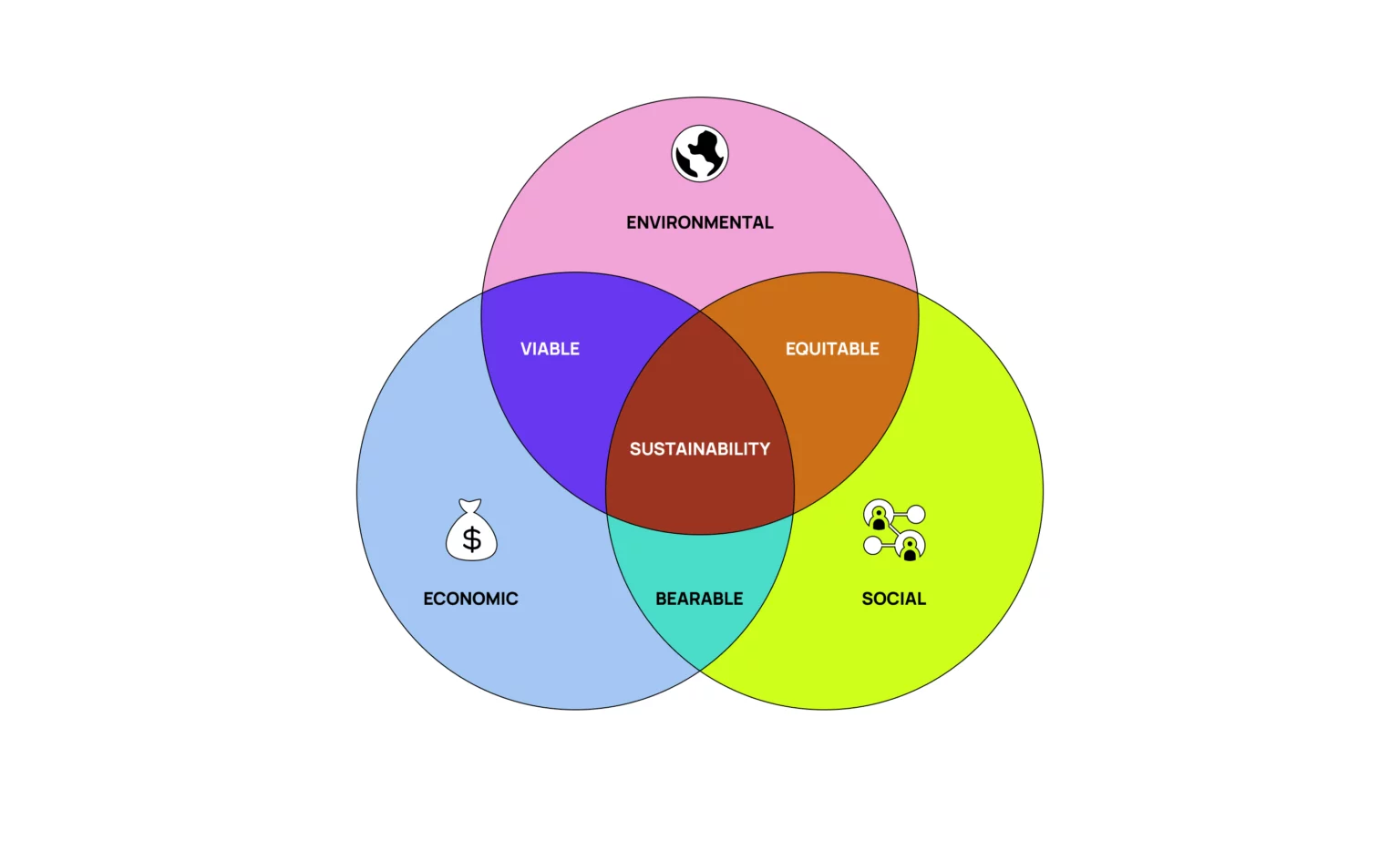
Sustainability is defined by the UNCD as: “development that meets the needs of the present without compromising the ability of future generations to meet their own needs.” It usually has three main aspects:
While ecological sustainability is paramount to many of us, sustainability must also be considered from social and economic perspectives. At its core, sustainability involves enhancing positive impact on the planet while reducing negative effects. UX/UI solutions have great potential to create a significant impact on promoting sustainability across all three dimensions.
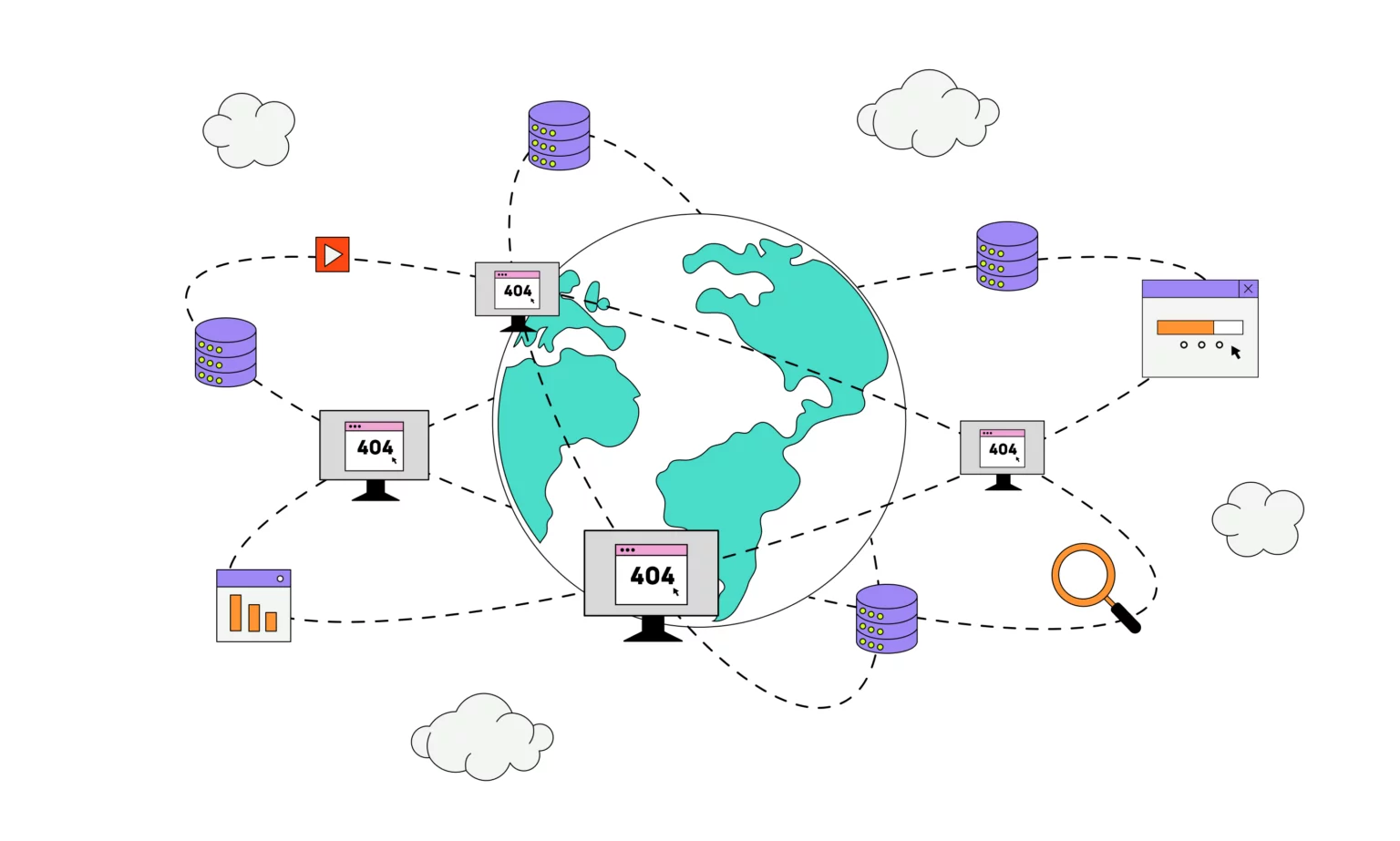
Over the past decade, we have been slowly moving toward an internet-driven world. While environmental and accessibility awareness have been topics of conversation for years, the digital revolution has brought to our attention how the internet fits into the sustainability debate. You might be wondering, how exactly is my browsing impacting the planet?
Let’s talk about how the internet impacts all three aspects of sustainability. Internet Live Stats suggests approximately 1.8 billion websites are running online, drawing in over 4 billion daily visitors. This activity causes emissions of approximately 2,330,041 tons of CO2 and consumes 2,339,400 MWh of electricity every day. The internet is responsible for roughly 4% of all carbon emissions — a number that is only set to rise as it continues relying on heavy infrastructure and large amounts of energy.
Economically, while the internet fosters innovation and efficiency, it can also lead to increased energy consumption and e-waste from the rapid turnover of digital devices. The digital economy can sometimes perpetuate unsustainable consumption patterns, as demand for new technologies and online services grows.
Socially, the internet is a double-edged blade — enabling the growth of awareness on topics like inclusivity, diversity, and climate change, while also contributing to digital divides where access to technology is unequal and promoting misinformation that can hinder progress on social sustainability issues.
Therefore, sustainable UX/UI design is crucial. It helps reduce the negative environmental impacts of internet use while mitigating the economic and social downsides, ensuring a more balanced and sustainable digital future.
If you’re evaluating agencies for environmental or sustainable UI/UX design services, here’s what a genuinely capable partner should offer—not just “eco-friendly” as a marketing label, but measurable practices:
| Service Area | What It Involves | Business Impact |
|---|---|---|
| Sustainability UX audit | Measuring current page weight, carbon footprint, and energy inefficiencies across your site or app | Baseline to track improvement, often surfaces quick performance wins |
| Green design systems | Building lightweight, reusable UI components and low-impact color/typography systems | Faster builds, consistent low-carbon output across every new page |
| Low-carbon web design | Optimizing images, animations, and code for minimal data transfer | Faster load times, better Core Web Vitals, lower hosting costs |
| Accessible + sustainable UX | Designing for both environmental and social sustainability simultaneously | Wider usable audience, often a compliance requirement (WCAG) |
| ESG-aligned UX reporting | Documenting design decisions against ESG frameworks for stakeholder or investor reporting | Supports corporate ESG disclosures and procurement requirements |
At Lollypop, sustainable UX isn’t a separate add-on service — it’s built into how we approach UX research and design from day one, across the same services we already offer for fintech, healthcare, SaaS, and e-commerce clients.
Looking to make your product more sustainable without sacrificing usability or conversion? Talk to our team →
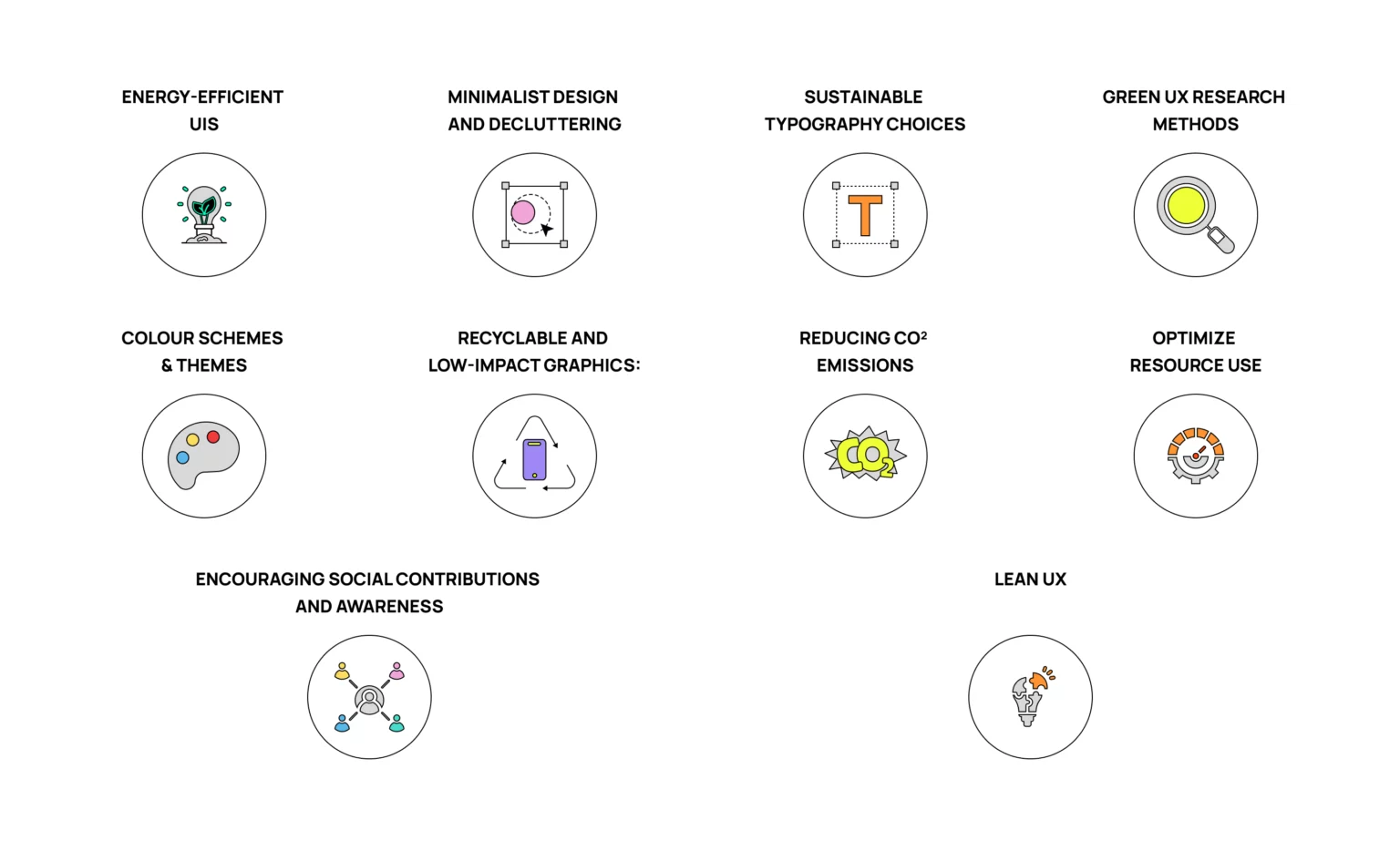
While we as designers can’t single-handedly fix this pressing issue, we can do our part to protect our home. Here are 10 things to keep in mind while designing your next project:
1. Energy-Efficient UIs Minimize animations to reduce CPU usage and lower energy consumption. Implement adaptive brightness features to conserve device battery life.
2. Minimalist Design and Decluttering Embrace minimalism to reduce digital clutter and improve load times. Focus on clarity and symbolism to create simple designs that enhance user experience.
3. Sustainable Typography Choices Choose fonts that are ink-efficient and have a lower carbon footprint. Sans-serif fonts like Garamond and Century Gothic typically use less ink than others. Optimize web font loading strategies for faster, greener websites.
4. Green UX Research Methods Embrace remote user testing to cut travel-related emissions. Champion eco-friendly materials for prototypes and research tools. Map stakeholders to include ecosystems and societal groups affected by digital products.
5. Colour Schemes and Themes Opt for color choices that reduce screen energy consumption. Darker colors can reduce energy usage by up to 60% on OLED screens — dark mode consumes less energy and remains a trending, user-preferred theme.
6. Recyclable and Low-Impact Graphics Optimize images, icons, and illustrations for web use to reduce their carbon footprint. Ensure assets have faster loading times and reduced bandwidth usage. Source graphics that are reusable across projects.
7. Reducing CO₂ Emissions Minimize data-heavy components to lower CO₂ emissions. Craft layouts with precision, maximizing space to cut down on scrolling and data transfer. Use renewable energy sources to power devices and servers where possible.
8. Optimize Resource Use Write clean, efficient code to reduce computational resources and energy consumption. Design for durability so products and services last longer, promoting sustainability and longevity.
9. Encouraging Social Contributions and Awareness Foster positive societal impact through ethical communication and social contributions. Over 15% of the global population experiences some form of disability that can affect web accessibility — prioritize interfaces that are accessible, user-friendly, and promote equality.
10. Lean UX Eliminate waste in design processes by adopting Agile and Lean UX methodologies. Leverage design systems for more efficient workflows and development, promoting sustainability through streamlined practices.
ESG (Environmental, Social, and Governance) has moved from a corporate reporting requirement to a design consideration. As more enterprises formalize ESG commitments, UX teams are increasingly expected to show how their design decisions support them.
For B2B and enterprise products especially, ESG-aligned UX design is becoming a genuine procurement criterion — not just a values statement. If your product serves enterprise clients, this is worth building into your design process now rather than retrofitting later.
A number of major design and prototyping platforms have made public sustainability commitments worth knowing about if you’re evaluating your own tool stack:
“We don’t need a handful of people doing zero waste perfectly. We need millions of people doing it imperfectly.” — Anne Marie Bonneau
We should all be aware that we’ve got one planet, which has fed, sheltered, and nurtured us. Starting your sustainable journey might feel overwhelming, but something is better than nothing — even the smallest changes can make a profound impact. Let’s ensure that in the future, we’re not regretting our inaction on a toxic, pollution-ravaged planet, but instead celebrating our efforts and enjoying life on a flourishing, growing Earth.
Ready to build a product that’s both sustainable and genuinely usable? Get in touch with Lollypop →
1. What is sustainable UI/UX design?
Sustainable UI/UX design is the practice of designing digital products to minimize their environmental impact — through lighter page weight, efficient code, dark-mode-friendly interfaces, and minimalist layouts that reduce data transfer and energy consumption, while also considering social and economic sustainability.
2. What do environmental or sustainable UI/UX design services typically include?
These services typically include a sustainability UX audit of your current site or app, building lightweight and reusable design systems, optimizing images and code for lower data transfer, ensuring accessibility alongside environmental sustainability, and documenting design decisions for ESG reporting purposes.
3. Does dark mode actually help sustainability?
Yes, on OLED and AMOLED screens specifically. Darker pixels require less power to display, and studies suggest darker color schemes can reduce screen energy consumption by up to 60% compared to light-heavy interfaces. On LCD screens, the effect is much smaller since LCDs use a backlight regardless of color.
4. What is ESG UX design?
ESG UX design refers to designing digital products in a way that supports a company’s Environmental, Social, and Governance commitments — for example, reducing a product’s carbon footprint (environmental), ensuring accessible and inclusive design (social), and maintaining transparent design documentation (governance) for stakeholder reporting.
5. How can I make my website more environmentally sustainable?
Start with the highest-impact, lowest-effort changes: optimize and compress images, reduce unnecessary animations and scripts, offer a dark mode option, simplify your layout to cut scrolling and data transfer, and choose efficient, well-optimized fonts. A sustainability UX audit can identify your site’s specific biggest offenders.