
As customer behavior, technology, and digital experience expectations continue to evolve, websites need to keep pace with changing user needs and business goals. If your website hasn’t been updated in over two years, its design, structure, or functionality may no longer meet current expectations, potentially affecting user experience and conversion rates.
However, a successful website redesign involves more than refreshing the visual appearance. It requires a thoughtful approach to user research, UX/UI design, technical development, and SEO. Choosing the right Website Redesign Agency can help businesses navigate this process while maintaining their existing digital value.
In this article, we explore when to consider a website redesign, how agencies compare with in-house teams and freelancers, what the process involves, and how to choose the right partner.
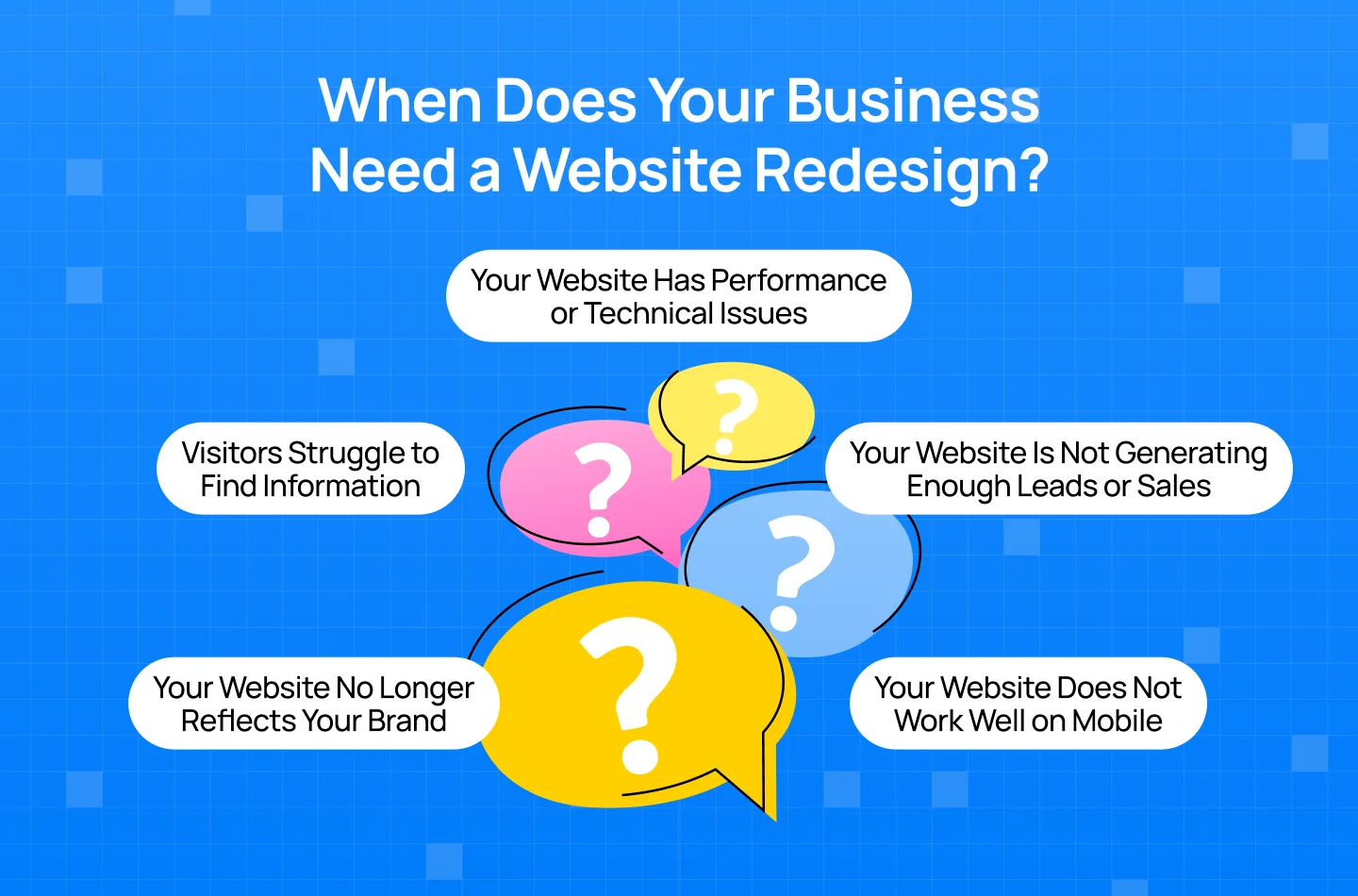
A website redesign is not always necessary just because a website looks outdated. However, as businesses grow and user expectations evolve, an existing website may no longer support the company’s marketing efforts or business goals.
According to Webflow’s 2026 State of the Website report, which surveyed 1,000 marketing and technology leaders, 92% of organizations report that website update requests are becoming more complex, while 97% of technical leaders say technical debt significantly affects their ability to manage websites. These findings highlight the challenges businesses face when their existing website infrastructure struggles to keep up with evolving needs.
Rather than following a fixed redesign schedule, businesses should evaluate whether their current website can support their business goals, deliver a smooth user experience, and adapt to changing technical requirements.
Here are five signs that it may be time to consider a website redesign:
| Metric | What it measures | Good threshold |
|---|---|---|
| LCP | Loading performance | ≤ 2.5 seconds |
| INP | Interaction responsiveness | ≤ 200 ms |
| CLS | Visual stability | ≤ 0.1 |
Businesses can approach a website redesign by hiring an external agency or building an in-house team. Each option offers different advantages in terms of cost, expertise, project management, and long-term support.
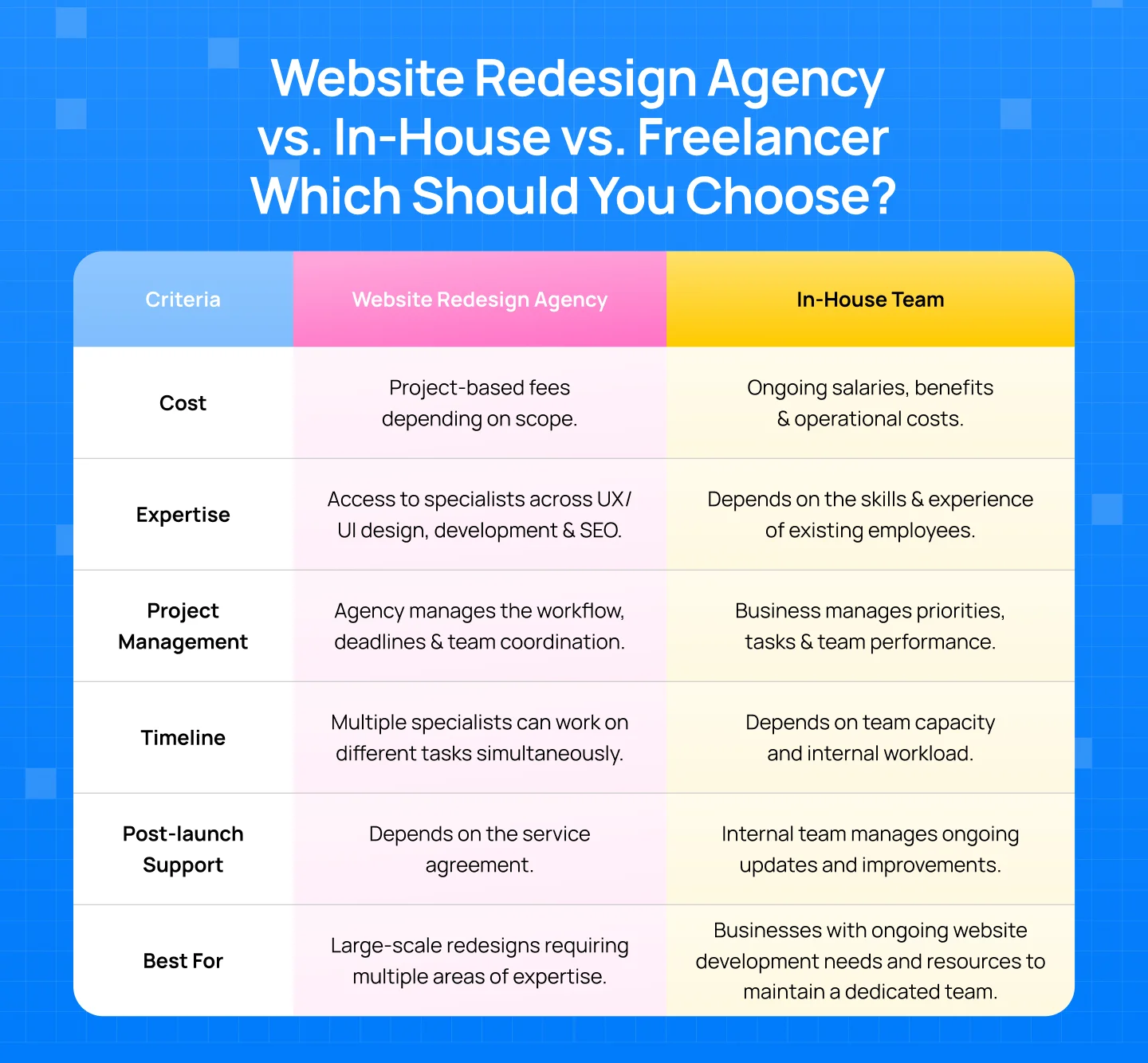
The choice between an agency and an in-house team depends on your project’s scope and long-term business needs. An agency can provide a wider range of expertise and manage the redesign from start to finish without requiring permanent hires. In contrast, an in-house team offers greater direct control and ongoing involvement in website development. Businesses should consider their budget, available resources, and future website needs before deciding which approach works best.
A website redesign typically involves four key phases, from understanding business requirements to launching the redesigned website. Each phase addresses specific tasks to ensure the final website meets user needs and business goals.
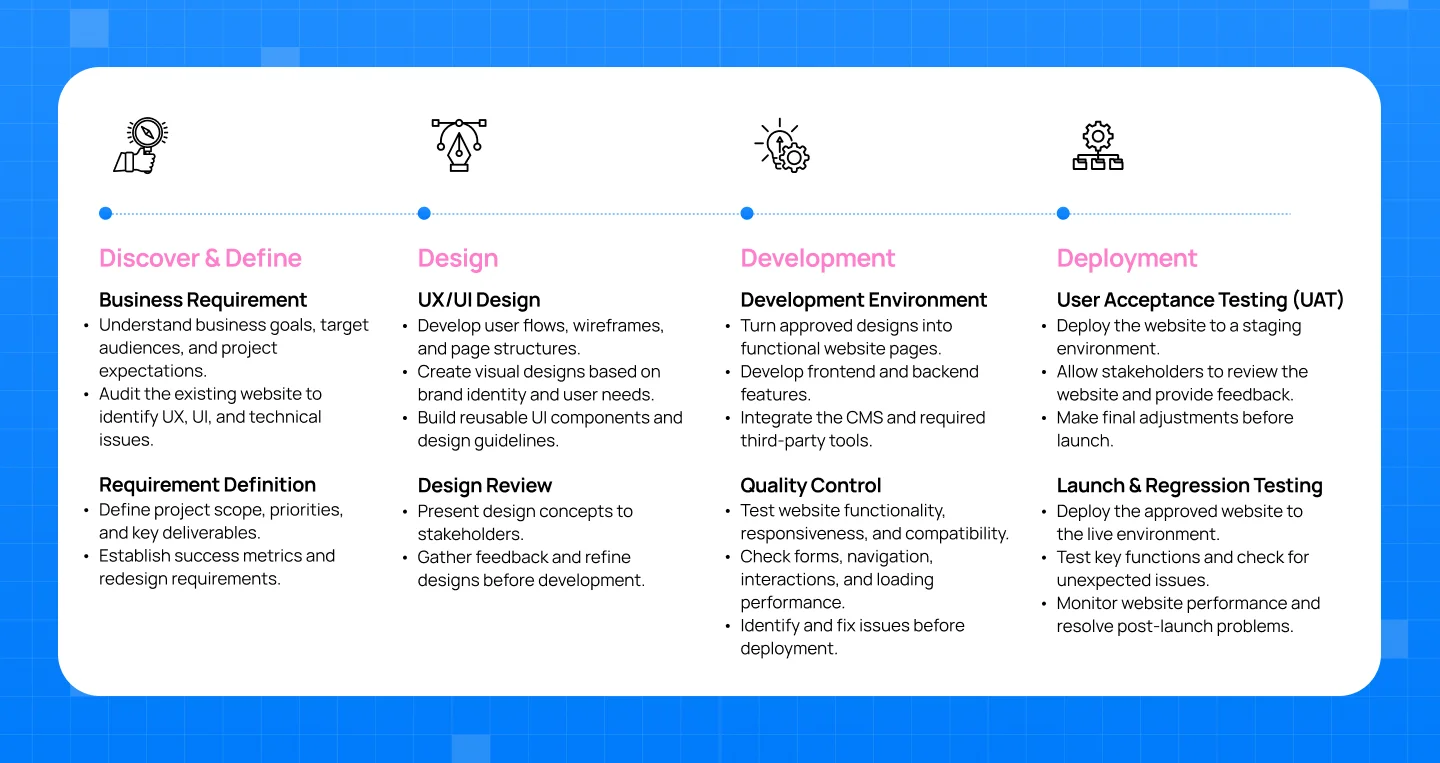
Every redesign project comes with its own set of challenges, from defining the right direction to getting every detail ready for launch. If you’re interested in how these steps are handled in practice, take a look at Lollypop’s design process to explore the approach behind each project.
A website redesign can affect existing search rankings and organic traffic, especially when URLs, page content, or site structures change. Without proper planning, pages that previously performed well may lose visibility or become inaccessible to search engines.
To minimize these risks, businesses should consider the following:
Start by understanding how your current website performs before making any changes. Google Analytics and Google Search Console can help identify pages that attract organic traffic, generate leads, or rank for valuable keywords.
Pay particular attention to:
These insights provide a reference point for deciding which elements to preserve or improve during the redesign.
A redesign does not mean every page needs a new URL or completely rewritten content. Keeping high-performing pages intact can help retain the SEO value your website has already built.
Whenever possible:
If the redesign involves changing the URL structure, each old URL should have a clear destination on the new website. A 301 redirect tells search engines and visitors that a page has permanently moved.
Create a URL mapping document before launch to match old URLs with their corresponding new pages. Avoid redirecting unrelated pages to the homepage, as each redirect should lead visitors to the most relevant destination.
Before the new website goes live, review its technical setup to make sure search engines can access and understand its pages.
Key checks include:
One common issue is leaving temporary noindex settings on the staging website after deployment. This can prevent search engines from indexing the new pages.
Once the redesigned website is live, continue monitoring its search performance rather than assuming everything is working as expected.
Submit the updated XML sitemap through Google Search Console and track changes in organic traffic, keyword rankings, indexing status, and crawl errors. If unexpected drops or technical issues appear, investigate and resolve them as early as possible.
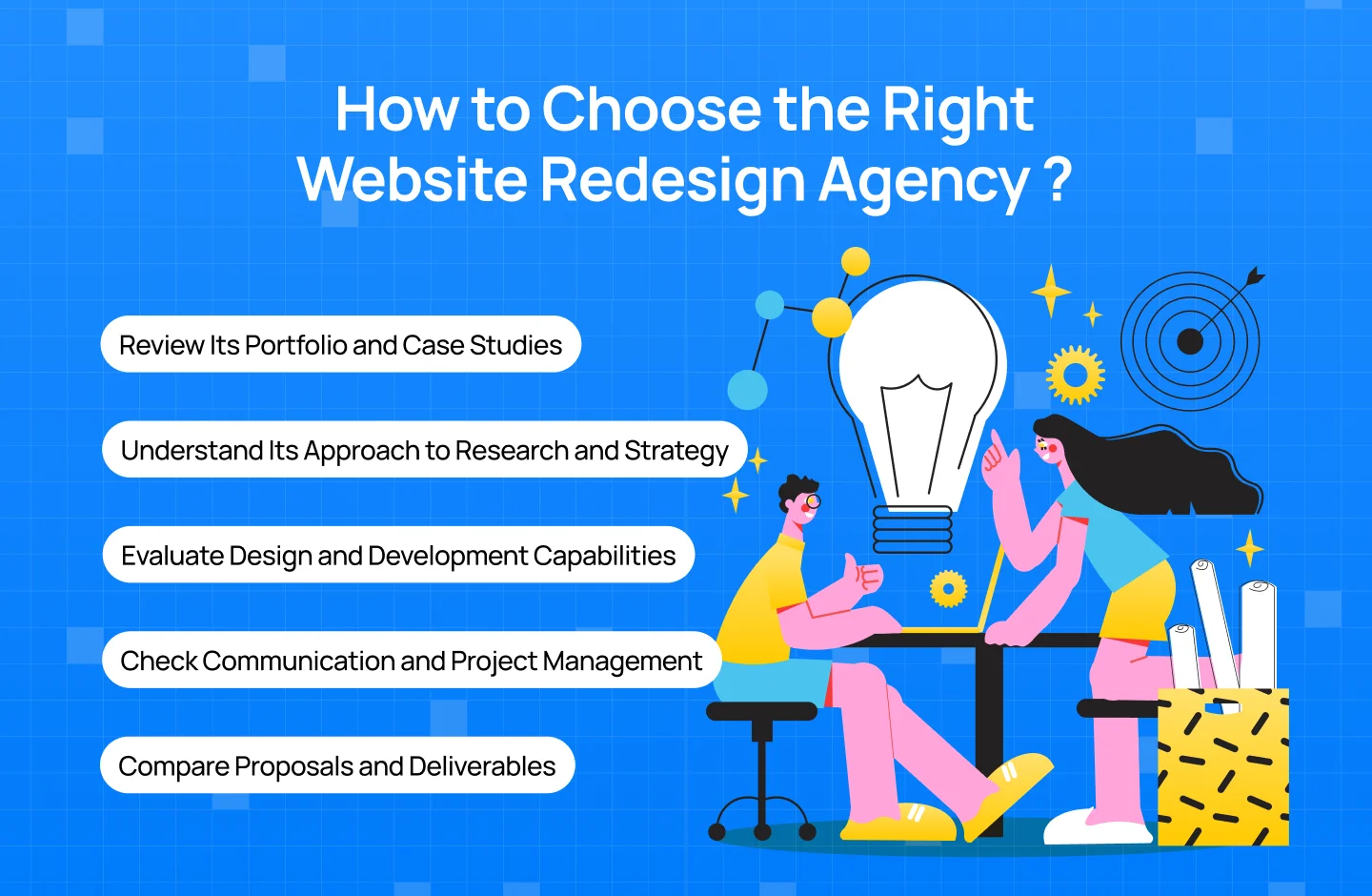
Choosing a website redesign agency goes beyond finding a team with an impressive portfolio. The right partner should understand your business goals, identify problems with your existing website, and have the expertise to turn those findings into a practical redesign plan.
Here are five factors to consider before making your decision:
Look for projects that demonstrate experience with similar business needs or website complexity. Pay attention to how the agency addresses design challenges, improves user experience, and delivers results rather than focusing only on visual quality.
A good agency should understand your business goals and existing website issues before suggesting design solutions. Its recommendations should be based on user needs, website performance, and project objectives rather than visual preferences alone.
Website redesign involves both design and technical implementation. Make sure the agency can handle UX/UI design, responsive development, and CMS integration to ensure the new website works as well as it looks.
Clear communication helps keep the project on track. Before committing, understand who will manage the project, how feedback will be handled, and how progress will be communicated throughout the collaboration.
Review what each agency includes in its proposal, from project scope and timeline to final deliverables and post-launch support. A clear breakdown helps you compare options and avoid unexpected costs during the project.
Before starting a website redesign, businesses need to consider more than the agency’s proposal and estimated budget. Internal decisions, existing website dependencies, and expectations for the final outcome can all affect how smoothly the project runs.
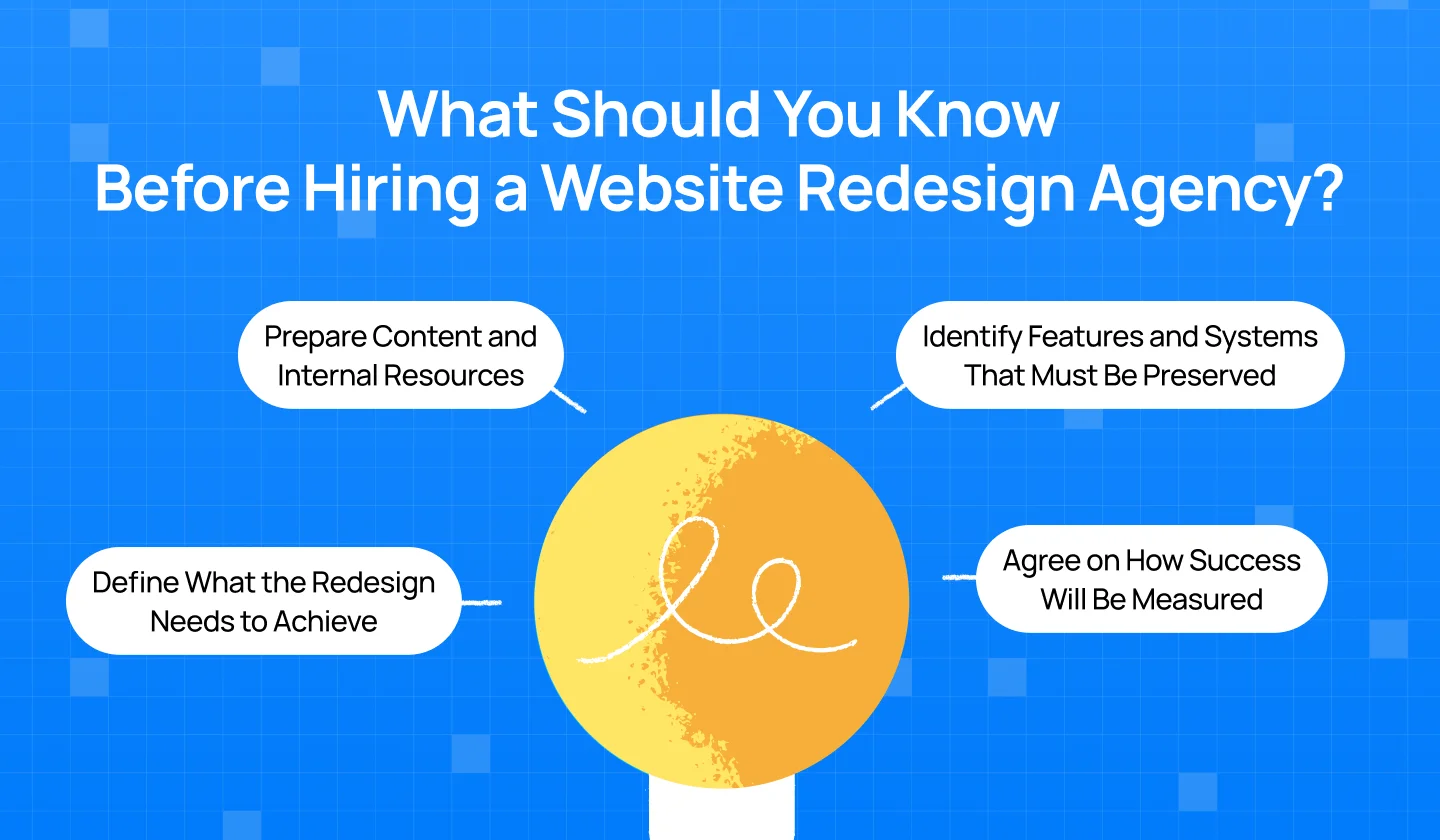
A website redesign should solve specific business problems, not simply make the website look more modern. Before hiring an agency, identify what is not working and what needs to improve. This could include generating more qualified leads, simplifying navigation, improving mobile usability, or communicating a new brand position.
Having clear priorities helps the agency recommend solutions that address actual business needs rather than unnecessary design changes.
A redesign requires input from both the agency and the business. While the agency may handle design and development, your team often needs to provide product information, brand materials, business insights, and feedback.
It is also important to assign a decision-maker who can consolidate feedback and approve deliverables. Without clear responsibilities, conflicting opinions between departments can slow down the project.
Your existing website may connect to tools that are essential to daily operations, such as CRM platforms, payment gateways, booking systems, analytics tools, or lead forms.
List these dependencies before the project begins and discuss how they will be handled during the redesign. Missing an important integration can disrupt business operations even if the new website looks and functions well.
A successful redesign should be evaluated through business and user experience improvements, not visual changes alone.
Agree on measurable goals with the agency before work begins, such as:
Establishing these benchmarks gives both parties a clearer way to evaluate the results after launch.
Website redesign costs vary depending on the project’s scope, complexity, and level of customization. A simple visual refresh requires fewer resources than a complete redesign involving UX research, custom development, content migration, and third-party integrations.
Rather than looking for a fixed price, businesses should understand what goes into the overall project cost.
Not all agency proposals cover the same services. One quote may include research, content migration, and post-launch support, while another may only cover design and development.
Before making a decision, check:
A clear breakdown of these details helps businesses compare proposals based on the actual value and services provided, rather than choosing an agency based on the lowest quote alone.
A website redesign is an opportunity to create a better digital experience for your customers while supporting your business goals. Finding the right agency means choosing a partner who understands your challenges and can turn them into effective design solutions.
Planning a website redesign? Talk to Lollypop to discuss your project and explore how we can help bring your vision to life.
The timeline depends on the website’s size, complexity, and project requirements. A smaller website may take a few weeks, while a large-scale redesign involving custom features, integrations, and content migration can take several months.
A business should consider a redesign when its website no longer reflects the brand, provides a poor user experience, performs poorly on mobile devices, or fails to support its current business goals.
A website refresh focuses on smaller updates, such as changing colors, typography, images, or page layouts. A redesign involves more substantial changes to the website’s structure, user experience, visual direction, and functionality.
It can. Changes to URLs, content, internal links, and site structure may affect search visibility. Proper URL mapping, 301 redirects, and post-launch monitoring help minimize potential SEO disruptions.
If the existing website has a solid technical foundation, updating its design and structure may be sufficient. However, if the platform is outdated, difficult to maintain, or unable to support new business requirements, building a new website may be a better option.
Prepare your business goals, target audience, current website analytics, brand guidelines, and a list of required features. Having these details ready helps the agency understand your needs and develop a more accurate project proposal.