Artificial intelligence is becoming part of HR, but adoption is still far from universal.
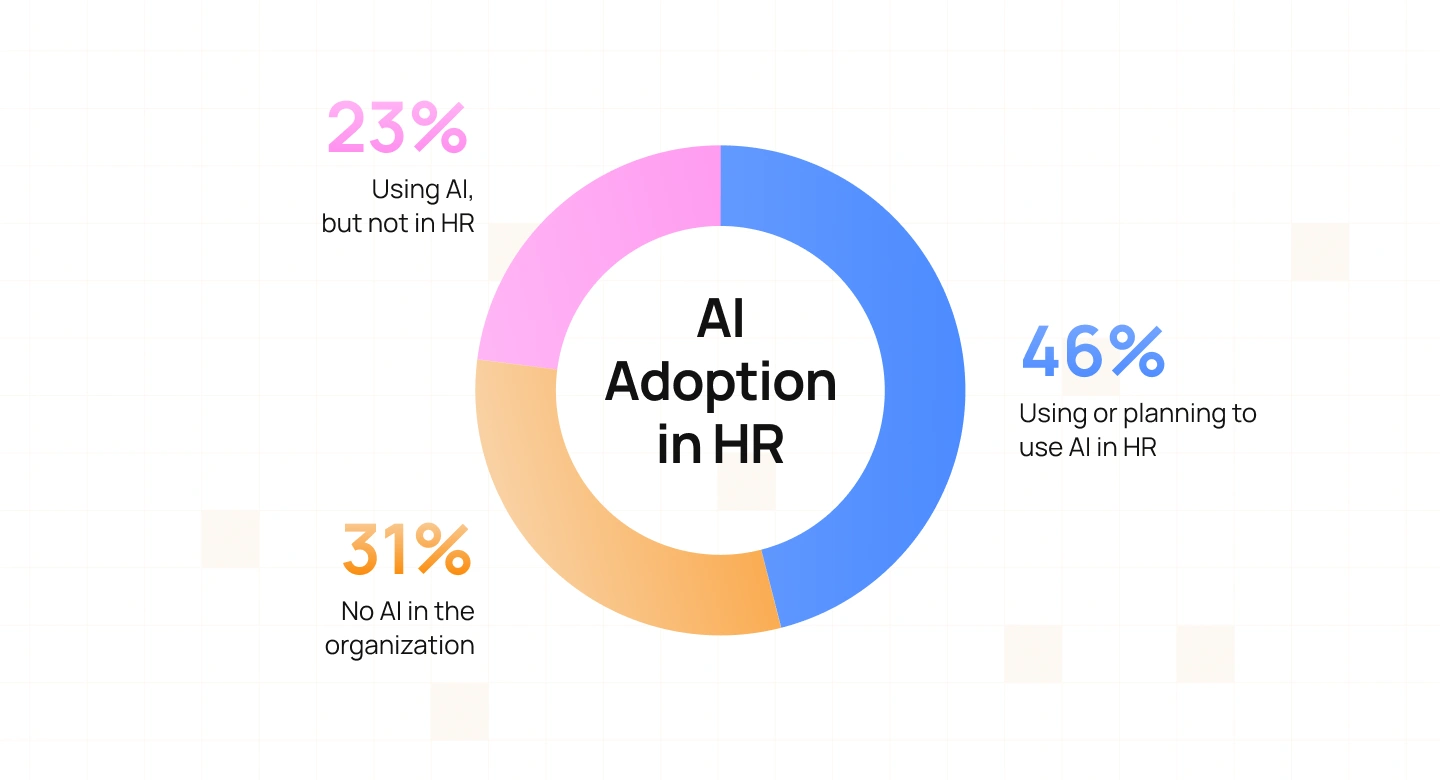
According to SHRM’s 2026 State of AI in HR research, 39% of organizations have implemented AI in their HR functions, while 62% are using AI somewhere in the business. Another 46% expect to use AI in HR in 2026. The gap suggests that AI adoption in HR is moving forward, but unevenly.
Where AI is being used, the focus is largely practical. Recruiting accounts for 27% of AI use in HR, followed by HR technology at 21% and learning and development at 17%.
For HR technology companies, recruitment firms, HR consultancies, and other businesses serving the HR market, this creates a more important question than whether AI is simply “the future” of HR: Where does AI actually create value, and what does an AI-ready HR business need to look like?
AI adoption in HR is concentrated in areas where technology can support repetitive processes, information-heavy work, and decision-making. Recruiting is currently the most established use case, while HR technology and learning and development are also seeing meaningful adoption.
The pattern is important because it shows where AI is proving useful today. Rather than replacing entire HR functions, most applications are being introduced into specific tasks within existing workflows.
Recruiting is currently the leading area of AI adoption in HR.
Common applications include writing and optimizing job descriptions, screening and matching resumes, scheduling interviews, generating recruitment content, and supporting recruiting analytics.
SHRM’s 2026 research on recruiting executives points to continued growth. Ninety-two percent of recruiting executives expect generative AI use for job descriptions and recruitment content to become more prevalent, while 87% expect greater use of AI and automation across recruiting processes.
The change is not simply about reducing administrative work. AI is expanding what recruiting technology can do. A recruiting platform can increasingly help interpret candidate information, identify potential matches, automate routine communication, and surface information that recruiters can use in their decisions.
That also raises the importance of human judgment. As more routine work becomes automated, recruiters have more responsibility for interpreting information, assessing context, and making decisions that technology cannot make reliably on its own.
AI is also becoming embedded directly into HR technology.
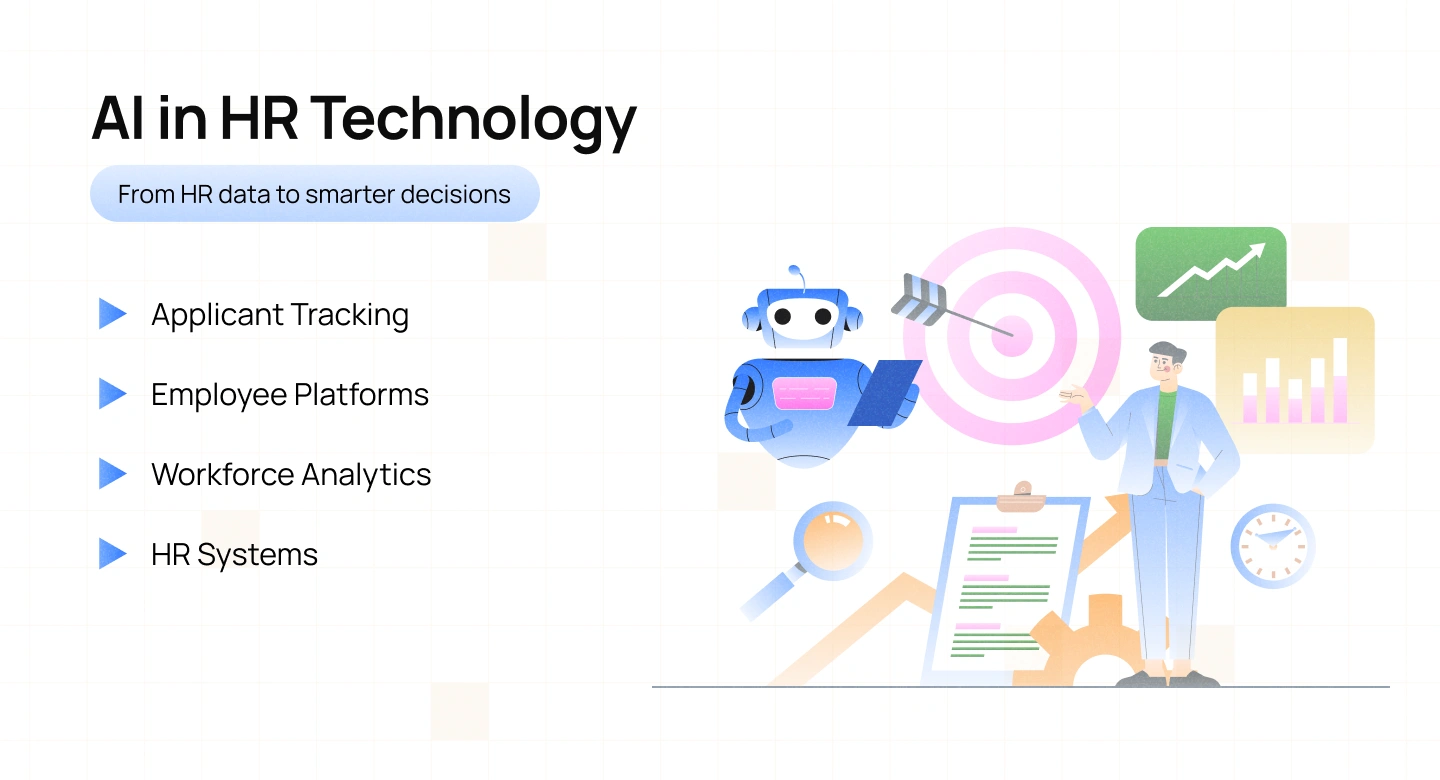
Instead of using AI as a separate tool, HR teams can increasingly encounter it within applicant tracking systems, employee platforms, learning systems, workforce analytics, and other HR software.
This changes the role of HR technology from simply storing and organizing information to helping users interpret it.
For product teams, that means the challenge is no longer only to add an AI feature. The product needs to make the feature useful, understandable, and appropriate to the decision being made.
Learning and development is another area where AI is gaining traction.
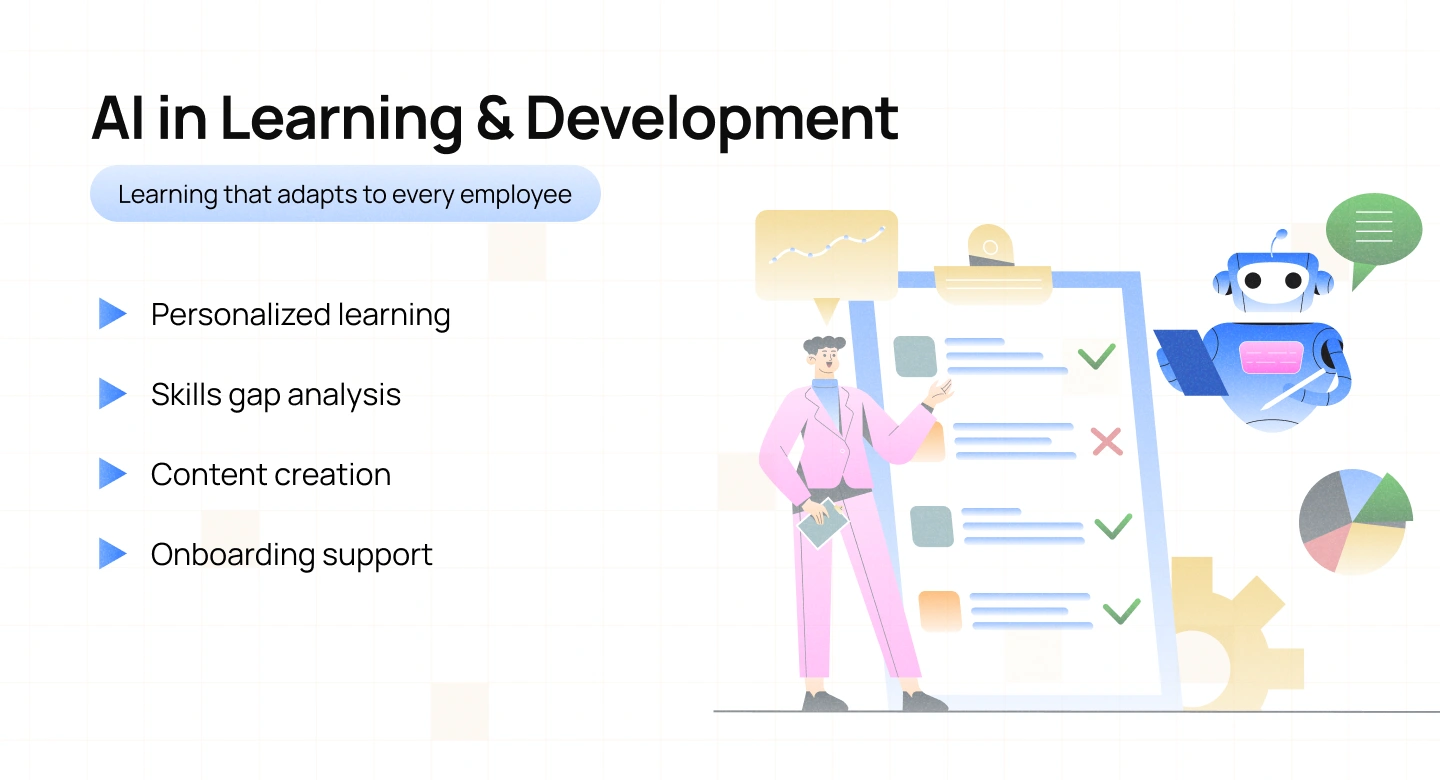
Current applications include content generation, personalized learning, skills development, and onboarding. SHRM identifies learning and development as one of the leading areas of AI use in HR, accounting for 17% of reported adoption.
For HR technology companies, AI creates an opportunity to move beyond static training libraries toward experiences that can adapt to an employee’s role, skills, and development needs.
But personalization depends on context. AI can generate content quickly; it cannot compensate for inaccurate employee data, poorly defined skills, or unclear learning objectives.
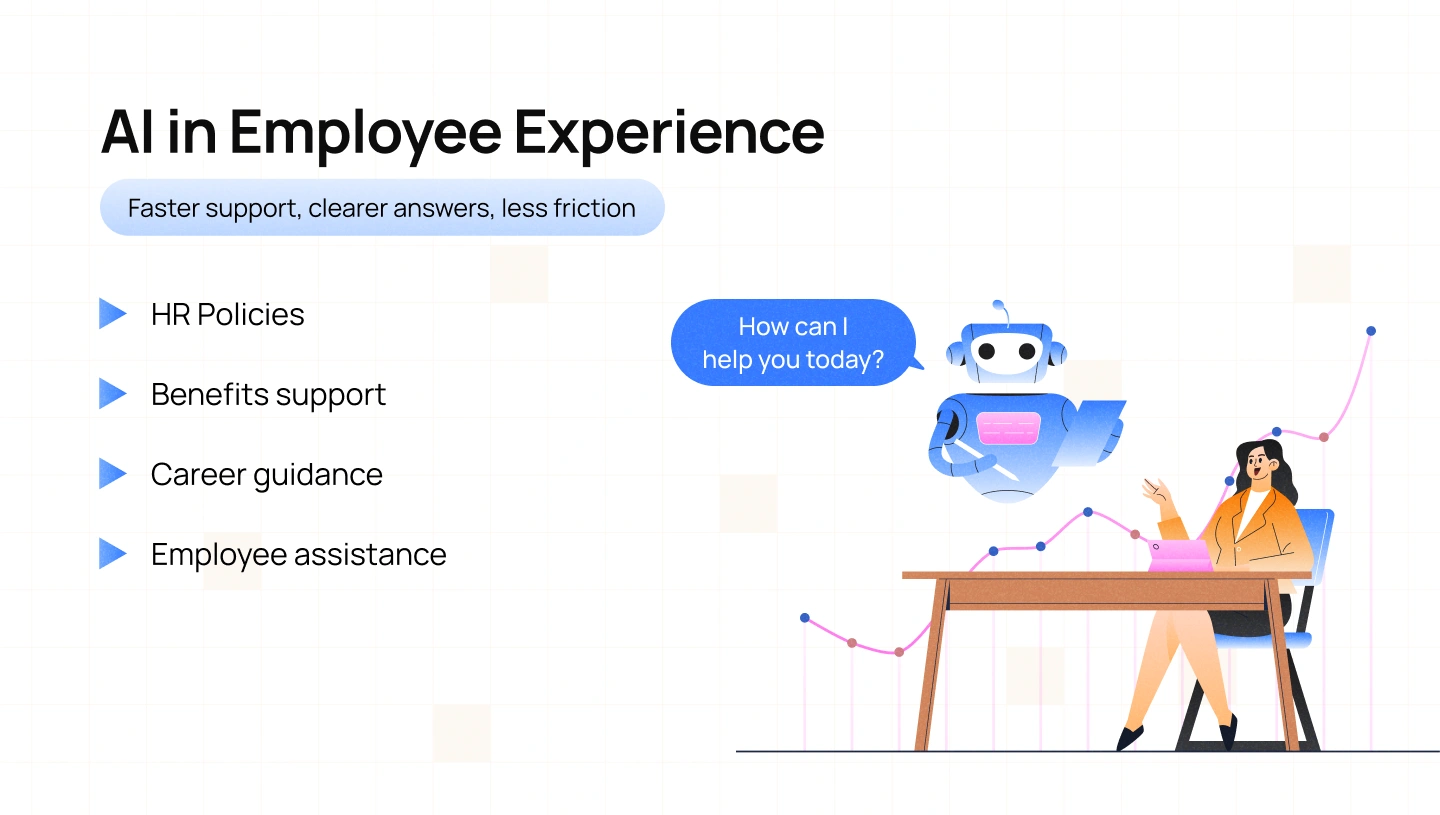
AI is also beginning to support employee-facing experiences, including internal communication, employee support, and engagement-related workflows.
The opportunity is similar to other HR applications: reduce repetitive work while making information easier to access and act on.
The challenge is different, however, when employees are directly interacting with AI. Trust, transparency, and the ability to understand when and how AI is being used become part of the experience itself.
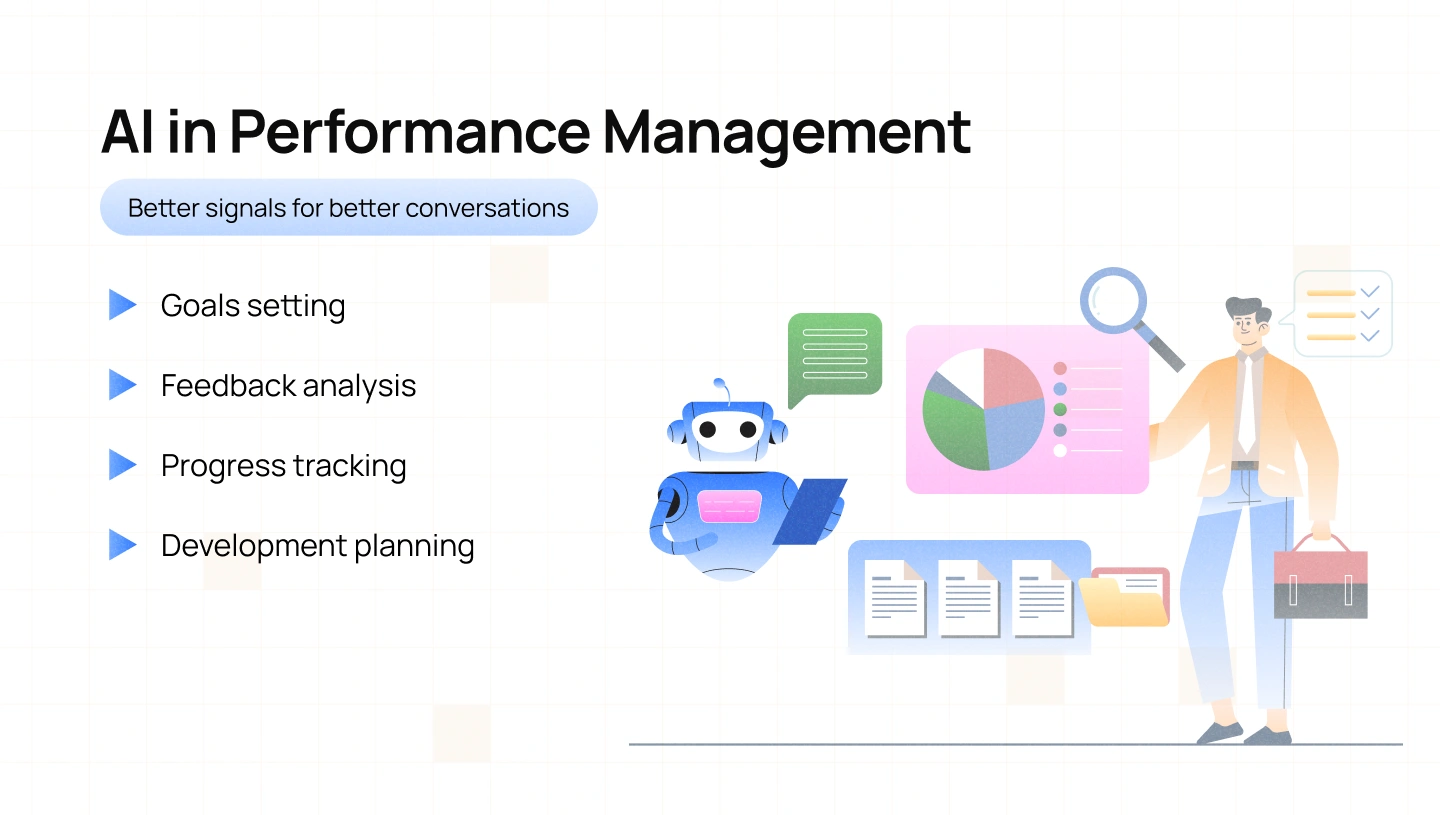
Performance management presents a different challenge from recruitment or administrative automation.
The work involves data, but it also involves context, judgment, communication, and relationships. That makes it one of the areas where the distinction between AI assistance and automated decision-making matters most.
AI can support performance review preparation, feedback, goal tracking, performance summaries, and performance analytics. The value is not necessarily in making the final decision. It is in helping managers work with information more efficiently.
SHRM’s 2026 research similarly emphasizes that AI’s value in HR depends on pairing technology with human experience, judgment, and empathy.
Performance reviews require managers to gather information, identify patterns, and communicate observations clearly.
AI can assist with some of the administrative work involved in that process, such as organizing information, summarizing performance data, and helping managers prepare feedback.
The benefit is time and clarity—not removing the manager from the review process.
AI can also support more continuous performance conversations instead of concentrating feedback around a single annual review.
For HR technology providers, this creates an opportunity to build workflows around goals, progress, feedback, and development rather than treating performance management as a once-a-year event.
The product challenge is making those interactions useful without turning every employee interaction into another data point to be scored.
Performance data can reveal patterns across teams, goals, skills, and workforce activity.
AI can help identify those patterns and provide managers or HR teams with information for further investigation.
However, an analytical signal is not the same as a conclusion. Performance analytics should give decision-makers better information, while leaving room for context that may not be visible in the data.
Performance decisions can affect compensation, promotion, development, and an employee’s experience at work.
That makes human oversight essential.
An AI-enabled performance product should make it clear what information the system has considered, what it is suggesting, and where the manager remains responsible for the decision.
For designers, this is not simply a usability consideration. It is part of building trust into the product.
AI adoption does not automatically create better HR outcomes.
SHRM’s research shows that organizations are still working through practical barriers around AI adoption, including governance, skills, privacy, security, and implementation readiness.
AI depends on the information available to it.
HR systems often contain data across recruiting, performance, learning, payroll, employee records, and other platforms. When that information is fragmented or inconsistent, AI has less reliable context to work with.
For HR technology companies, integration and data quality therefore become part of the product value—not simply technical infrastructure behind it.
HR systems handle some of the most sensitive information within an organization.
Employee records, compensation information, performance data, candidate information, and other personal details require appropriate controls when AI is introduced into the workflow.
Security and privacy cannot be treated as secondary considerations after an AI feature has already been built.
Introducing AI also changes what HR professionals need to know.
People need to understand not only how to use AI tools, but also how to evaluate their outputs, recognize limitations, protect sensitive information, and apply appropriate judgment.
SHRM’s 2026 research highlights the growing importance of AI skills as organizations expand their use of the technology.
HR leaders also need clear rules around how AI can be used.
Governance may cover data access, acceptable use, human oversight, bias, transparency, and accountability. Without clear policies, organizations can end up with inconsistent practices across teams and tools.
The challenge is therefore bigger than selecting the right AI system. Organizations need the operating practices around it to be equally mature.
For HR technology companies, AI readiness has another dimension.
A business may be building sophisticated AI capabilities into its product while its own digital presence remains difficult to understand.
Consider an HR technology company that describes itself as a “next-generation workforce transformation platform.”
The phrase may sound distinctive, but it does not clearly explain what the company actually provides.
Compare that with: AI-powered performance management software for enterprise HR teams.
The second description establishes the category, capability, audience, and use case much more clearly.
That clarity matters for people evaluating the company—and increasingly for AI systems trying to understand it.
An HR company should communicate its products, services, expertise, customers, and areas of specialization clearly across its website.
Product pages, service pages, FAQs, case studies, and educational content should reinforce a consistent understanding of the business rather than describing the same offering in different ways.
For marketers and brand managers, this is fundamentally a positioning issue: if the company cannot clearly explain what it does, it becomes harder for any system—or person—to understand where it belongs.
Web content is written primarily for people, but structured data provides additional information in a format that machines can interpret.
For HR technology companies, relevant structured information can help clarify business entities, products, services, and other important relationships represented on the website.
This does not mean adding schema for its own sake. The underlying business information still needs to be accurate, complete, and consistent.
A company’s website is only one source of information about the business.
Industry publications, credible third-party references, reviews, partnerships, and other external signals can provide additional context and support the company’s positioning.
For a specialized HR company competing against larger platforms, this external validation can be particularly important. A clear website tells people what the company claims to do; credible external sources can help reinforce that understanding.
AI readiness also depends on the technical condition of the website.
Security, performance, accessibility, and the ability of systems to efficiently access website content all contribute to the quality of a company’s digital foundation.
A strong brand presence cannot compensate for a website that is difficult for systems to access, interpret, or process.
This is where measuring AI readiness becomes useful.
Lollypop Spot is an AI discoverability platform for B2B companies. Its AI Readiness Audit evaluates six dimensions of a company’s digital presence: AI Content Presence, Structured Data, Brand Authority, Security Health, Web Performance, and Schema Coverage.
For an HR technology or HR services company, the practical question is simple: If an AI system had to build a profile of your company today, would it have enough reliable information to understand what you do, who you serve, and when your business is relevant?
That is the emerging role of AI visibility. It is not simply about getting more traffic. It is about making the business itself clear enough to be understood and represented accurately in AI-driven discovery.
Check your Spot Score to assess your AI readiness.
AI is becoming part of how HR teams recruit, manage performance, develop talent, and work with workforce information. But the most important shift is not simply the introduction of more AI tools. The bigger shift is in how HR work is being designed around them.
The organizations that benefit from AI will need more than automation. They will need reliable data, appropriate governance, capable people, thoughtful product design, and enough clarity to make their systems and services understandable. AI can accelerate HR processes, but its value ultimately depends on the quality of the systems, decisions, and experiences built around it.
For HR technology companies, that clarity increasingly extends beyond the product itself. As AI becomes another way people discover and understand information about businesses, being understood can become part of being visible. A company may have a strong product, but if its capabilities, expertise, and value are difficult for AI systems to interpret, that strength may not be reflected in how the business is discovered or represented.
The question for an HR business is therefore no longer only, “Where can we use AI?” It is also, “Can AI understand what we have built?” That is the foundation of AI readiness.
If your HR product needs to be rethought, redesigned, or built around a clearer user experience, connect with Lollypop. And if you want to understand how well your business is currently positioned for AI discovery, check your AI Visibility with Lollypop Spot.

AI in HR refers to the use of artificial intelligence to support or automate activities across areas such as recruiting, performance management, learning and development, employee experience, workforce planning, and HR technology.
AI can support performance review preparation, feedback, goal tracking, performance summaries, and performance analytics. Because performance decisions can directly affect employees, AI should support rather than replace appropriate human judgment.
The most immediate benefits are often related to efficiency and work quality. SHRM’s 2026 research found that 87% of HR professionals reported improved efficiency from AI, while 75% reported improved work quality.
Key risks include privacy and security issues, inaccurate outputs, bias, insufficient governance, and inappropriate reliance on automated recommendations. These concerns become particularly important when AI is used in decisions that affect employees.
HR companies can start by identifying high-value use cases, improving data quality, establishing governance, developing AI skills, and keeping appropriate human oversight in high-impact decisions. For HR technology companies, preparation should also include making the company’s products, services, expertise, and digital presence clear to both people and machines.
AI visibility refers to how effectively AI systems can understand and surface a company, product, service, or area of expertise when users ask relevant questions. For HR businesses, this means making the company’s category, capabilities, audience, and supporting information clear enough for AI systems to interpret accurately.